How a loving restoration helped save a forgotten farmhouse with a secret history
Community Feb 01, 2017 by Joann Macdonald Aurora Banner
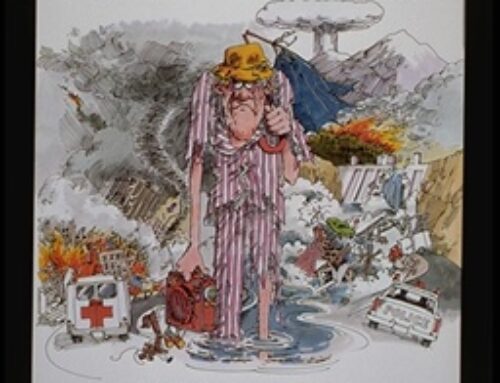
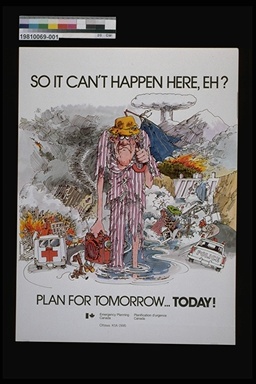
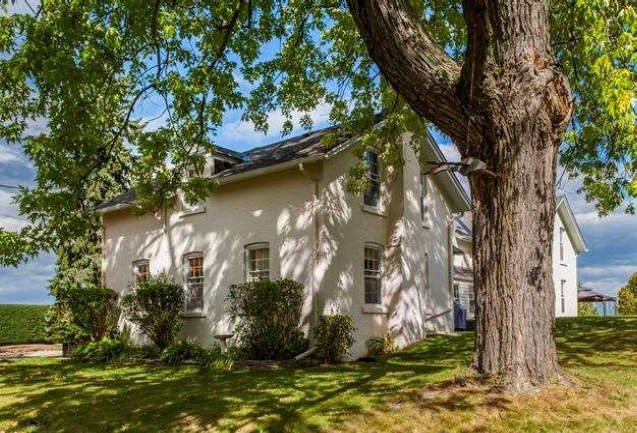
When it comes to homes with history and character, Orianna and Werner Brodbeck’s place is in a league of its own. The four-bedroom house on Old Yonge Street in Aurora calls to mind not one, but two, very different eras. The farmhouse, built back in 1875 by Thomas Pargeter, harkens back to a simpler time when green space was plentiful. But, in contrast, hiding beneath the property’s acre of land is a nuclear bunker — an artifact of the Cold War.
Technically an emergency preparedness centre (the structure wasn’t designed to withstand a direct bomb hit), the space was built by the City of Toronto in 1962. It was the height of the Cold War and the City wanted a place to house emergency personnel should the Cuban Missile Crisis lead to a nuclear attack.
“The property sits high on the Oak Ridges Moraine,” notes Orianna. “They thought the blast would go up over the house.” Crisis averted, the house became a centre for police emergency training in the 1970s. Then it was boarded up for more than two decades, until the Brodbecks purchased it from the City of Toronto in 1996.
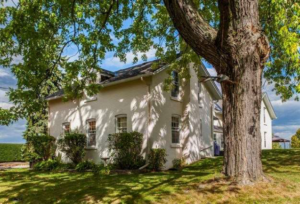 Seeing past the condition of the home took a special eye. The interior seemed more like an office like than a home; windows were covered with bulletin boards and the small kitchen was located on the second floor. Over the years, this kitchen had been used by tenant farmers who shared the dwelling with the homeowners.
“My husband’s very handy,” says Orianna. “You wouldn’t buy a house like this otherwise. We did the family room and his office first. It was a good place we could come to and relax and not look at the rest of it, because it was TLC to the max. It’s taken us 20 years to finish it.”
Now twice its original size (a previous owner, the Hamilton family, put on an addition in the 1930s), the house is divided between “old” and “new” halfway across the living room.
The family appreciates the home’s heritage, seen in the original art deco tiles in a tub and upstairs doors that once led to balconies. Werner, a skilled carpenter, stayed true to the home’s first era in the dining room, where he installed new trim around the windows to match the original built-in cupboards.
The Brodbeck family used the tiny second-floor kitchen — once a lunchroom for police officers — for 15 years, installing a main-floor kitchen just six years ago. (The original main-floor kitchen had been removed by the City to make room for an office.) The City also removed a patio, so the Brodbecks bricked off the patio door to gain more space in their new kitchen.
While they’ve worked hard to mesh old with new, not all the home’s charming features lent themselves to modern life. For example, back in the 1930s, the Hamilton family had installed a bathroom with a full shower right off the foyer, so that people coming in from the farm could clean up before entering the house. The Brodbecks replaced it with a mudroom.
There have been some changes upstairs as well. None of the five bedrooms had any closets, so the couple turned one into a full walk-in closet for the master bedroom. Another bedroom became daughter Analiese’s playroom.
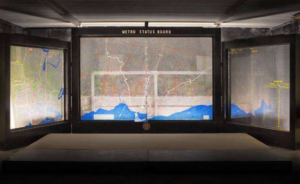 Perhaps the most unique part of the house is its full basement — an unusual feature for the time period — which leads, of course, to the famous bunker, where a large, hand-painted map details every Toronto street. Another board has space to document casualties, whether dead or wounded. There are also two massive tanks for an emergency water supply as well as emergency phone lines.
Because of the home’s unusual history, the Brodbecks have sought to protect it from demolition — something they felt even more urgently when they recently decided to sell it. “If the house comes down, this is lost,” says Oriana. Over the years, the couple has had multiple offers from builders who wanted to tear down the house and build on the property, but that never sat well with them.
But thanks to the Werners and the Town of Aurora, the house is now designated under the Ontario Heritage Act, so that any changes to the property must protect its historic value. And to top it all off, the house has now been sold to a family who pledges to love it as much as the Werners have.
Below are various video and printed media links about the Aurora facility which may be of interest:
https://www.youtube.com/watch?v=B0j6dl2ifuo
https://www.youtube.com/watch?v=TGEA3UY9NxA
https://www.youtube.com/watch?v=EKyRb1knKfM
https://www.doorsopenontario.on.ca/en/aurora/aurora-readiness-centre-bunker-former-cold-war-em
https://www.yorkregion.com/community-story/6801865–diefenbunker-aurora-house-with-cold-war- era-bunker-hits-market-for-1-6-m/
https://www.theglobeandmail.com/life/home-and-garden/architecture/inside-a-cold-war-bunker/ article552181/