Originally BLOG #11 – 01 Apr 2020 from davescoldwarcanada.com.
In the mid-eighties we in Emergency Preparedness Canada (EPC), Dir Emergency Operations Coord decided that, in view of the move by the telephone companies (namely Bell) away from copper-wire based transmission line networks lines towards fibre-optic grouped mainline cables, which unfortunately made the “new” system more vulnerable to disruption, we needed to find a backup communication method.
Since we were in the process up a midlife update for the bunker’s civilian Continuity of Government Program, we just ‘commandeered’ the 400-level bedroom next to the facilities Emergency Transmitter Room. Its location, and the fact that it had one of the building’s emergency exits as an integral part of the room, (allowing running cable to the exterior of the building – and potentially to an antenna) a made it a good choice.
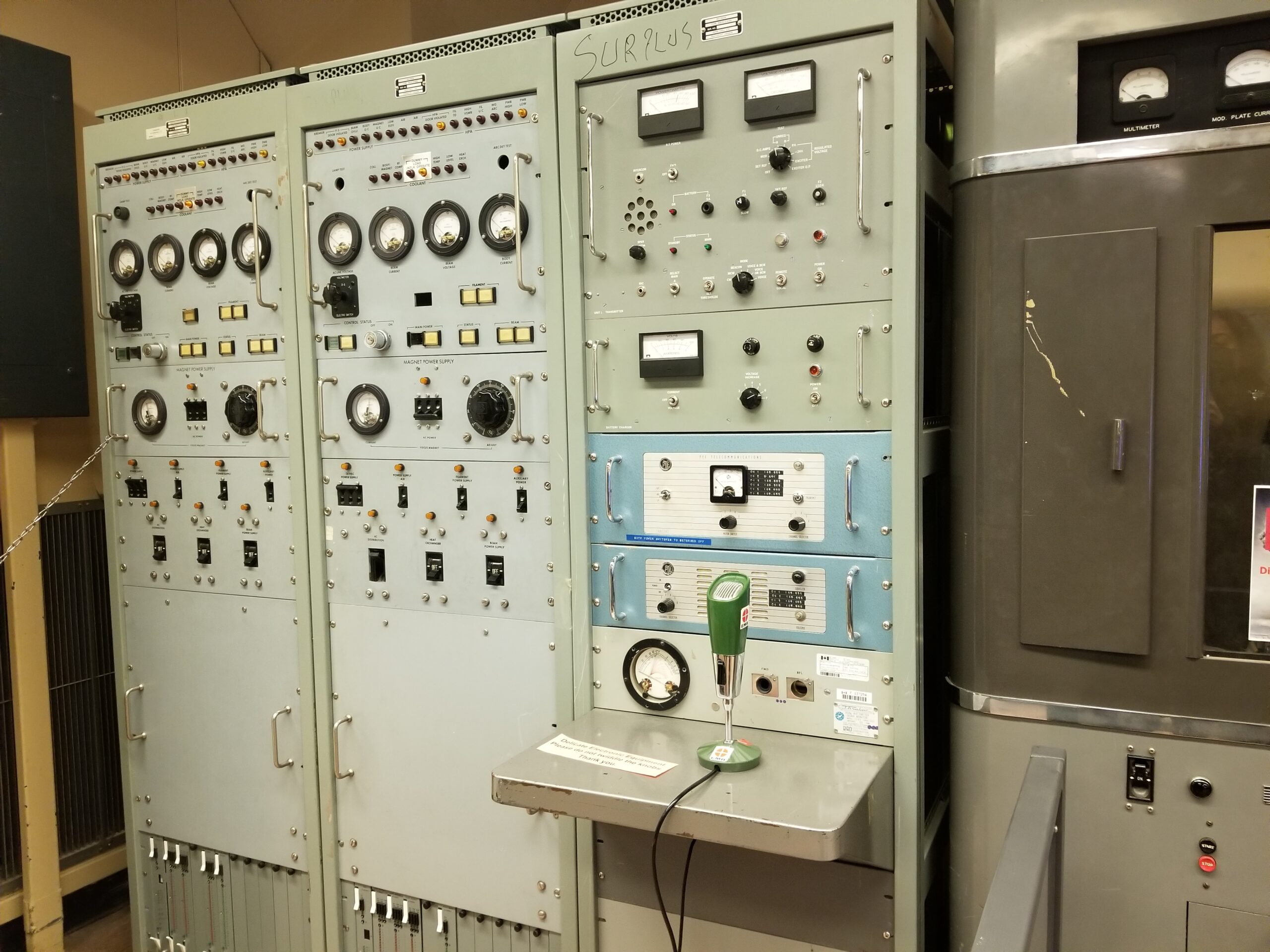
My Telecommunications Officer recommended building an HF Amateur Radio – ‘HAM” capability that would be able connect to each of our Regional Directors’ offices. We acquired sufficient HF equipment (over a couple of years) to create a crude but workable HF network. The original radio call sign for the Carp station was VE3GOC. The callsigns for the other EPC stations is unknown.
One of our main problems was finding enough Ham radio-qualified operators in each of Regional Directors’ Officer to support the operation of the network. By the late 1980s the network was operational, and I recall that we tested it regularly. It was voice only and qualified operators were in short supply but at least it gave us some degree of operational backup in the event of a serious problem with our primary means of communication, the telephone system. We partnered with Transport Canada to ensure we could access qualified operators in an emergency. My primary operations room was downtown Ottawa on the second floor of the Jackson Building at the corner of Bank and Slater (where we also had backup cross-country telecomms).
We in EPC were unable to convince DND to keep the Canadian Emergency Government HQ (CEGHQ) at CFS Carp open (or even to mothball it) and we had to move all our equipment out of the building in 1992. We moved it (including the HF radio equipment) to the Canadian Emergency Preparedness College (CEPC) in Arnprior and set it up there. In 1994 CFS Carp closed. I don’t know what happened to the HF equipment that was relocated to CEPC but we did get most of the CCTV and some other equipment back from there and set it up in the Diefenbunker as it was developing into Canada’s Cold War Museum.
When the Canadian Emergency Preparedness College was shut down, the original HF equipment was anonymously returned to CFS Carp, now the Diefenbunker, Canada’s Cold War Museum, where a group of devoted ‘Hams’ volunteers have recreated the room and its equipment which is still operational to this day, operating under the callsign of VE3CWM. Dave Peters and Brian Jeffrey.