The following is an attempt to provide some connection to 1945 and 1991 through a brief description of some of the principal activities of the Cold War that shaped the nuclear standoff, its eventual conclusion, and the nature of the post-Cold War world.
This chronology is by no means a complete compendium of world events during the period 1945-1991. It should be noted, that though the Cold War ended, many of the issues that arose during that period continue to fester today – the Middle East, the Korean Peninsula, Afghanistan, and the continent of Africa to name but a few.
4-11 Feb 45: Start of the Cold War. Yalta Conference.
A meeting of the Big Three (USA, UK, USSR) that discussed the dividing up of Germany; the formation of the United Nations; German war reparations; the entry of Soviet forces into the Far-Eastern front (Japan); and, the final, and most difficult issue, the future of Poland. The Conference highlighted fundamental disagreements between the Soviet Union and the Western Allies.
6 and 9 Aug 45: Atomic Bombs dropped on Hiroshima and Nagasaki The atomic bombings of Hiroshima and Nagasaki were nuclear attacks near the end of World War II against the Empire of Japan by the United States at the executive order of U.S. President Harry S. Truman on August 6 and 9, 1945, respectively.
The nuclear weapon “Little Boy” was dropped on the city of Hiroshima on Monday, August 6, 1945, followed on August 9 by the detonation of the “Fat Man” nuclear bomb over Nagasaki. These are to date the only attacks with nuclear weapons in the history of warfare.
The bombs killed as many as 140,000 people in Hiroshima and 80,000 in Nagasaki by the end of 1945, roughly half on the days of the bombings. In both cities, the overwhelming majority of the dead were civilians.
5 March 1946: Winston Churchill delivers “Iron Curtain” speech.
Speech delivered at Westminster College, Fulton, Mo on 5 Mar 46 to an audience including President Truman contained the following iconic phrases that summarized the division of Europe, “From Stettin in the Baltic to Trieste in the Adriatic an iron curtain has descended across the Continent. Behind that line lie all the capitals of the ancient states of Central and Eastern Europe. Warsaw, Berlin, Prague, Vienna, Budapest, Belgrade, Bucharest and Sofia, all these famous cities and the populations around them lie in what I must call the Soviet sphere, and all are subject in one form or another, not only to Soviet influence but to a very high and, in some cases, increasing measure of control from Moscow.”
1945-1947: Greek Civil War Fought between Greek communist and nationalist forces. The latter were supported by the British who were an occupying force at end of World War II. US aid eventually turned the tide in favour of the nationalists. 100,000 killed in conflict.
14-15 April 1947: Partition of India
The partition of British India that led to the creation, on August 14, 1947 and August 15, 1947, respectively, of the sovereign states of the Dominion of Pakistan (later Islamic Republic of Pakistan and People’s Republic of Bangladesh) and the Union of India (later Republic of India).
1947: Marshall Plan announced
In the immediate post-World War II period, Europe remained ravaged by war and thus susceptible to exploitation by an internal and external Communist threat. In a 5 June 1947 speech to the graduating class at Harvard University, Secretary of State George C. Marshall issued a call for a comprehensive program to rebuild Europe. Fanned by the fear of Communist expansion and the rapid deterioration of European economies in the winter of 1946-1947, Congress passed the Economic Cooperation Act in March 1948 and approved funding that would eventually rise to over $12 billion for the rebuilding of Western Europe.
1948-1960: Malayan Emergency
A guerrilla war for independence fought between Commonwealth armed forces and the Malayan National Liberation Army (MNLA), the military arm of the Malayan Communist Party, from 1948 to 1960.
The emergency ended with the defeat of the communists and the establishment of an independent Federation of Malaysia.
February 1948: Czechoslovak Coup d’Etat
After an election in 1946, the communists began to lose some of their popularity, and, as a 1948 election approached, their public support began to decline. Not leaving anything to chance, the communists staged a coup d’etat in February 1948 rather than wait for the scheduled May election. The legitimate government was ousted and a Moscow-oriented, communist regime installed.
May 1948-March 1949: First Arab-Israeli War
The war commenced upon the termination of the British Mandate of Palestine in mid-May 1948 following a previous phase of civil war in 1947–1948. After the rejection of the 1947 United Nations Partition Plan for Palestine (UN General Assembly Resolution 181) that would have created an Arab state and a Jewish state side by side, five Arab states: Egypt, Iraq, Jordan, Lebanon and Syria attacked the nascent state of Israel. The war concluded with the 1949 Armistice Agreements.
The Israeli victory led to the establishment of the Israeli state and sowed the seeds for future conflict with its Arab neighbours.
June 1948-May 1949: Berlin Airlift
During the multinational occupation of post-World War II Germany, the Soviet Union blocked the Western force’s railway and road access to the western sectors of Berlin. Their aim was to force the Western powers to allow the Soviet-controlled regions to start supplying Berlin with food and fuel, thereby giving them practical control over the entire city.
In response, the Western Allies formed the Berlin Airlift to bring supplies to the people of Berlin. The United States Air Force, Royal Air Force, and other Commonwealth nations flew over 200,000 flights that provided 13,000 tons of food daily, for the next year. By the spring of 1949, the effort was clearly succeeding, and by April the airlift was delivering more cargo than had previously flowed into the city via rail.
The success of the Airlift was humiliating to the Soviets, who had repeatedly claimed it could never work. The blockade was lifted in May.
July 1949: NATO formed
Formed in 1949, NATO was set up to discourage an attack by the Soviet Union on the non-Communist nations of Western Europe. As of 2010, the 28 member countries are Albania (2009), Belgium, Bulgaria (2004), Canada, Croatia (2009), Czech Republic (1999), Denmark, Estonia (2004), Finland (2023), France, Federal Republic of Germany (1955), Greece (1952), Hungary (1999), Iceland, Italy, Latvia (2004), Lithuania (2004), Luxembourg, Netherlands, Norway, Poland (1999), Portugal, Romania (2004), Slovakia (2004), Slovenia (2004), Spain (1982), Sweden (2024), Turkey (1952), United Kingdom and the United States.
The 12 original members are indicated in bold. The date of accession of other members is indicated in parentheses.
September 1949: Chinese Civil War ends
Started in the 1930s as a conflict between the Communists led by Mao Tse Tung and the Nationalists under Chiang Kai Shek. Interrupted by World War II but restarted at the end of the war, led to establishment of communist Peoples Republic of China on the mainland and nationalist Taiwan.
September 1949: Soviet Union explodes its first Atomic Bomb
The Soviet atomic project benefited from highly successful espionage efforts on the part of the Soviet military intelligence (GRU) as well as the foreign intelligence department of the NKVD.
1952-1960: Mau Mau Uprising
The Mau Mau Uprising of 1952 to 1960 was an insurgency by Kenyan peasants led by Jomo Kenyatta against the British colonialist rule. The uprising failed militarily, though it hastened Kenyan independence in 1963 and motivated Africans in other countries to rise against colonial rule.
1 November 1952: Explosion of first Hydrogen Bomb
The United States achieved nuclear fusion for the first time when it exploded the first hydrogen bomb at the Eniwetok Proving Grounds. The first “true” Soviet hydrogen bomb was exploded on 22 November 1955.
June 1950-July 1953: Korean War
The conflict arose from the attempts of the two Korean powers to re- unify Korea under their respective governments. Negotiations ended when the North Korean Army invaded the South on June 25, 1950.
Under the aegis of the United Nations, nations allied with the United States intervened on behalf of South Korea. After rapid advances in a South Korean counterattack, Chinese forces intervened on behalf of North Korea, shifting the balance of the war and ultimately leading to an armistice that approximately restored the original boundaries between North and South Korea.
Altogether 26,791 Canadians served in the Korean War and another 7,000 served in the theatre between the cease-fire and the end of 1955. The names of 516 Canadian war dead are inscribed in the Korea Book of Remembrance.
21 July 1954: Launch of the USS Nautilus
The USS Nautilus was the world’s first nuclear-powered submarine, thereby adding a new dimension to sea warfare and, ultimately, to the Cold War.
July 1954: Vietnam split at 17th parallel.
The war between the Communist Viet Minh forces and France which began in 1946 came to an end with the defeat of the French at Dien Bien Phu, and Viet Nam was divided into Communist North Viet Nam and Democratic South Vietnam.
1954-1962: Algerian War of Independence.
A conflict between France and Algerian independence movements from 1954 to 1962, which led to Algeria gaining her independence from France.
26 January 1955: End of World War II between USSR and Germany!
The USSR formally ended its state of war with Germany.
May 1955: Warsaw Pact formed
The Warsaw pact was signed on May 14, 1955 in Warsaw, Poland. The pact was created so that if any country in the pact were to be the victim of aggression, the other countries in the pact would defend them. The Soviet Union initiated the pact in response to West Germany entering the North Atlantic Treaty Organization in 1955.
Founding members were Albania (left in 1968), Bulgaria, Czechoslovakia, Hungary, Poland, Romania, German Democratic Republic; and, the Soviet Union.
Oct-Nov 1956: Hungarian Revolution crushed.
The Hungarian Revolution of 1956 was a spontaneous nationwide revolt against the Stalinist government of the People’s Republic of Hungary and its Soviet-imposed policies, lasting from 23 October until 10 November 1956.
The revolt began as a student demonstration which attracted thousands as it marched through central Budapest to the Parliament building. The revolt spread quickly across the Hungary, and the government fell.
After announcing a willingness to negotiate a withdrawal of Soviet forces, the Politburo changed its mind and moved to crush the revolution. On 4 November, a large Soviet force invaded Budapest and other regions of the country.
Hungarian resistance continued until 10 November. Over 2,500 Hungarians and 700 Soviet troops were killed in the conflict, and 200,000 Hungarians fled as refugees, many of them to Canada.
31 Oct 1956: Egypt takes control of Suez Canal (Second Arab-Israeli War).
On October 31, 1956, British, French, and Israeli troops invaded Egypt in what would prove to be an ineffective and unpopular attempt to gain control of the Suez Canal after it had been nationalized by Egypt. The international outcry against the Suez crisis invasion was swift. The United States was harshly critical of its traditional allies and led a censure movement at the United Nations. The resolution to the Suez crisis was passed and fighting came to an end seven days after it began. Two weeks later, United Nations troops moved into the canal zone where they would remain as a peacekeeping force for the following ten years.
This was the first UN peacekeeping mission – an initiative of Canadian Prime Minister, Lester Pearson.
4 Oct 1957: Sputnik launched
Sputnik was the world’s first Earth-orbiting artificial satellite. It was launched into a low altitude elliptical orbit by the Soviet Union and was the first in a series of satellites collectively known as the Sputnik program. The unanticipated announcement of Sputnik 1′s success ignited the Space Race within the Cold War.
12 May 1958: Signing of the North American Air Defence (NORAD) Agreement
In September 1957, Canada and the United States agreed to create the “North American Air Defense Command” (NORAD) headquartered in Colorado Springs, Colo. as a bi-national command, centralizing operational control of continental air defenses against the threat of Soviet bombers. The agreement included 11 principles governing the organization and operation of NORAD and called for a renewal of the agreement every 10 years.
Despite the end of the Cold War, NORAD remains in existence to this day.
Jan 1959: Fidel Castro takes power in Cuba
Castro came to power as a result of the Cuban revolution that overthrew the U.S.-backed dictatorship of Fulgencio Batista, and shortly thereafter became Prime Minister of Cuba. In 1965 he became First Secretary of the Communist Party of Cuba and led the transformation of Cuba into a one-party socialist republic. The establishment of a communist regime close to the United States created concern within the US which erupted into crisis in 1962.
1 May 1960: U-2 Incident
The incident occurred when an American U-2 spy plane was shot down over the Soviet Union. At first, the United States government denied the plane’s purpose and mission, but was forced to admit its role as a covert surveillance aircraft when the Soviet government produced its remains and surviving pilot, Francis Gary Powers. Coming just over two weeks before the scheduled opening of an East-West summit in Paris, the incident was a great embarrassment to the United States and prompted a marked deterioration in its relations with the Soviet Union.
20 July 1960: First Launch of a SLBM
The first underwater launch of a Polaris Submarine Launched Ballistic Missile (SLBM) was successfully carried out from USS George Washington (SSBN-598) off Cape Canaveral.
12 April 1961: Yuri Gargarin Orbits the Earth
The Soviet cosmonaut Yuri Gargarin became the first human in outer space and the first to orbit the Earth.
17-19 April 1961: Bay of Pigs Invasion
An unsuccessful attempt by a U.S.-trained force of Cuban exiles to overthrow the Cuban government of Fidel Castro with support from U.S. government armed forces. The failed invasion severely embarrassed the Kennedy Administration and made Castro wary of future US intervention in Cuba.
13 Aug 1961: Construction of Berlin Wall begins.
The Berlin Wall was a physical barrier completely encircling West Berlin, separating it from the German Democratic Republic (GDR) (East Germany), including East Berlin. The longer intra-German border demarcated the border between East and West Germany. Both borders came to symbolize the Iron Curtain between Western Europe and the Eastern Bloc.
The wall and the intra-German border separated East Germany from West Germany for more than a quarter-century until the Wall was torn down on 9 November 1989. During this period, at least 98 people were confirmed killed trying to cross the Wall into West Berlin.
October 1962: Cuban Missile Crisis
A confrontation between the United States, the Soviet Union, and Cuba in October 1962. The Cuban and Soviet governments decided in September 1962 to place nuclear missiles on Cuba in order to protect it from United States harassment. When United States intelligence discovered the weapons its government decided to do all they could to ensure the removal of them. The crisis ranks with the Berlin Blockade as one of the major confrontations of the Cold War, and is generally regarded as the moment in which the Cold War came closest to a nuclear war.
Although the Canadian government remained undecided on a course of action during the crisis, the Canadian armed forces were placed on a high state of alert and units of the RCAF and RCN participated in the United States blockade.
The “hot line” between Moscow and Washington was established as a result of this crisis as a means to forestall future events of brinkmanship.
30 October 1961: Explosion of Tsar Bomba
The Tsar Bomba was the largest, most powerful nuclear weapon ever detonated. It was a three-stage hydrogen bomb with a yield of about 50 megatons. This is equivalent to ten times the amount of all the explosives used in World War II combined. It was detonated on October 30, 1961, in the Novaya Zemlya archipelago, and was capable of approximately 100 megatons, but was purposely reduced shortly before the launch. The explosion was hot enough to induce third degree burns at 100 km.
10 April 1963: Loss of USS Thresher
The United States nuclear attack submarine, USS Thresher was lost with its entire crew of 129. This was the first known loss of a nuclear submarine.
July 1963: Limited Nuclear Test Ban Treaty Ratified
The Treaty prohibited nuclear weapon test explosions and any other nuclear explosions in three environments: in the atmosphere, in outer space and underwater, but did not prohibit underground nuclear explosions.
1964-1973: The Viet Nam War (US involvement)
The overarching geopolitical aim behind the United States’ involvement in Vietnam was to contain the spread of communism in Southeast Asia. US involvement in Vietnam began during the administration of Dwight D. Eisenhower (1953-1961), which sent US military advisors to South Vietnam. John F. Kennedy (1961-1963) decided to commit American support troops to South Vietnam. Four thousand troops were sent in 1962.
Under President Lyndon B. Johnson (1963-1968), US intervention mushroomed both militarily and politically.
The United States escalated its participation in the war to a peak of 543,000 troops in April 1969. American forces in Southeast Asia operated under some stringent restrictions, including being forbidden to invade enemy territory in North Vietnam and, for many years, likewise being barred from ground operations against enemy sanctuaries in bordering Laos and Cambodia.
Richard M. Nixon (1969-1974) was elected on the claim that he had a “secret plan” for honourably disengaging American troops, which succeeded initially only in intensifying the conflict. This last phase of American involvement in South Vietnam was carried out under a broad policy called Vietnamization. Its main goal was to create strong, largely self-reliant South Vietnamese military forces. Vietnamization also meant the withdrawal of a half-million American soldiers.
This war became hugely unpopular in the United States and fostered a vocal peace movement and a generation of anti-war “flower children”. During the early months of 1974, the North Vietnamese army advanced from the north and west on the southern capital. They soon surrounded Saigon with an ever-tightening perimeter. Saigon fell to the Communists on 29 April 1975.
April 1965: US Intervention in the Dominican Republic
When civil strife broke out in the Dominican Republic in April 1965, the United States decided to dispatch troops to protect American lives and to prevent a possible Castro-type takeover by Communist elements.
By 8 May U.S. forces in the island republic totalled 14,000 men, including paratroop units flown from the United States and Marines landed by Navy ships.
5-10 June 1967: Third Arab-Israeli War (The Six Day War)
A war between the Israeli army and the armies of the neighboring states of Egypt, Jordan, and Syria.
Egyptian President Gamal Abdel Nasser expelled the United Nations Emergency Force (UNEF) from the Sinai Peninsula in May 1967. Egypt amassed 1,000 tanks and nearly 100,000 soldiers on the Israeli border and closed the Straits of Tiran to all ships flying Israeli flags or carrying strategic materials, receiving strong support from other Arab countries. Israel responded with a similar mobilization that included the call up of 70,000 reservists to augment the regular IDF forces.
On June 5, 1967, Israel launched a pre-emptive attack against Egypt’s airforce. Jordan, which had signed a mutual defence treaty with Egypt on May 30, then attacked western Jerusalem.
At the war’s end, Israel had gained control of the Sinai Peninsula, the Gaza Strip, the West Bank, East Jerusalem, and the Golan Heights.
1967-1975: Cambodian Civil War
A conflict that pitted the forces of the Communist Party of Kampuchea (known as the Khmer Rouge) and their allies, the Democratic Republic of Vietnam (North Vietnam) and the National Front for the Liberation of South Vietnam (Viet Cong) against the government forces of Cambodia (after October 1973, the Khmer Republic), which were supported by the United States and the Republic of Vietnam (South Vietnam).
After five years of savage fighting that brought about massive casualties, the destruction of the economy, the starvation of the population, and grievous atrocities, the Republican government was defeated on 17 April 1975 when the victorious Khmer Rouge proclaimed the establishment of Democratic Kampuchea. This civil war led to the Cambodian Genocide, one of the most bloody in history.
23 January 1968: The Pueblo Incident
USS Pueblo (AGER-2) a Banner-class technical research ship (Navy intelligence) was boarded and captured by the Democratic People’s Republic of Korea on 23 January 1968 in what is known as the Pueblo incident.
North Korea stated that she had strayed into their territorial waters, but the United States maintained that the vessel was in international waters at the time of the incident.
Pueblo, still held by the DPRK today, officially remains a commissioned vessel of the United States Navy. It is currently located in Pyongyang, where it is used as a museum ship.
August 1968: Czechoslovak Revolution
In 1968, in response to a brief period of liberalization, five Eastern Bloc countries invaded Czechoslovakia. Soviet Russia rolled tanks into Prague on August 21, 1968. Soviet Premier Leonid Brezhnev viewed this intervention as vital to the preservation of the Soviet, socialist system and vowed to intervene in any state that sought to replace Marxism- Leninism with capitalism.
20 July 1969: Apollo 11 Lands on the Moon
The Apollo 11 mission was the first manned mission to land on the Moon. Launched on July 16, 1969, it carried Mission Commander Neil Armstrong, Command Module Pilot Michael Collins and Lunar Module Pilot Edwin ‘Buzz’ Aldrin, Jr. On July 20, Armstrong and Aldrin became the first humans to land on the Moon.
October 1970: The October Crisis
The October Crisis was a series of events triggered by two kidnappings of government officials by members of the Front de libération du Québec (FLQ), a radical Quebec separatist group, during October 1970. These circumstances ultimately culminated in the only peacetime usage of the War Measures Act in Canada’s history.
The events of October 1970 galvanized support against violence in efforts for Quebec sovereignty and highlighted the movement towards political means of attaining greater autonomy and independence, including support for the sovereigntist Parti Québécois, which went on to form the provincial government in 1976.
26 May 1972: SALT I Signed
SALT I, the first series of Strategic Arms Limitation Talks, extended from November 1969 to May 1972. During that period the United States and the Soviet Union negotiated the first agreements to place limits and restraints on some of their central and most important armaments. In a Treaty on the Limitation of Anti-Ballistic Missile Systems, they moved to end an emerging competition in defensive systems that threatened to spur offensive competition to still greater heights. In an Interim Agreement on Certain Measures with Respect to the Limitation of Strategic Offensive Arms, the two nations took the first steps to check the rivalry in their most powerful land- and submarine-based offensive nuclear weapons.
6-26 October 1973: Fourth Arab-Israeli War (The Yom Kippur War) The war began with a surprise joint attack by Egypt and Syria on Yom Kippur, the Jewish Day of Atonement. Egypt and Syria crossed the cease-fire lines in the Sinai and Golan Heights, respectively, which had been captured by Israel during the Six-Day War.
The Egyptians and the Syrians advanced during the first 24–48 hours, after which momentum began to swing in Israel’s favor. By the second week of the war, the Syrians had been pushed out of the Golan Heights. In the Sinai to the south, the Israelis struck at the seam between two invading Egyptian armies, crossed the Suez Canal (where the old ceasefire line had been), and cut off the Egyptian Third Army just as a United Nations cease-fire came into effect.
The war had far-reaching implications for many nations. The Arab World, which had been humiliated by the lopsided defeat of the Egyptian-Syrian-Jordanian alliance during the Six-Day War, felt psychologically vindicated by its string of victories early in the conflict.
This vindication paved the way for the peace process that followed the Camp David Accords, which came soon after, led to normalized relations between Egypt and Israel—the first time any Arab country had recognized the Israeli state. Egypt, which had already been drifting away from the Soviet Union, then left the Soviet sphere of influence entirely.
July-August 1974: Turkish Invasion of Cyprus
In 1974, following years of intercommunal violence between ethnic Greeks and Turks and an attempted coup d’état by Greek Cypriot nationalists aimed at annexing the island to Greece and engineered by the military junta then in power in Athens, Turkey invaded and occupied one third of the island. This led to the displacement of thousands of Cypriots and the establishment of a separate Turkish Cypriot political entity in the north. This event and its resulting political situation are matters of ongoing dispute. For years Canada provided troops to the UN Peacekeeping Force on Cyprus (UNFICYP).
12-15 May 1975: The Mayaguez Incident
Less than two weeks after the Communist conquest of South Vietnam, forces of the Communist Khmer Rouge in Cambodia attacked and seized an American merchant ship, the Mayaguez, and captured the crew. President Gerald Ford reacted by sending in the Marines to rescue the crew.
The Khmer Rouge released the crew, but not before inflicting casualties on the American force. A total of 41 Marines and Airmen died, with 50 wounded.
1978-1988: Soviet Invasion of Afghanistan
The Soviet Invasion of Afghanistan was a nine-year conflict involving Soviet forces supporting the People’s Democratic Party of Afghanistan (PDPA) government against the mujahadeen resistance. This conflict was concurrent to the 1979 Iranian Revolution and the Iran–Iraq War. Due to the interminable and inconclusive nature of the war, the conflict in Afghanistan has often been referred to as the Soviet equivalent of the United States’ Vietnam War.
11 February 1979: Overthrow of Shah of Iran
The first major demonstrations against Shah Mohammad Reza Pahlavi began in January 1978. Between August and December 1978 strikes and demonstrations paralyzed the country. The shah left Iran for exile in mid-January 1979. Iran voted by national referendum to become an Islamic Republic on April 1, 1979, and to approve a new theocratic constitution whereby Khomeini became Supreme Leader of the country, in December 1979.
18 June 1979: SALT II Signed
SALT II was the first nuclear arms treaty which assumed real reductions in strategic forces to 2,250 of all categories of delivery vehicles on both sides.
4 November 1979: Iran Hostage Crisis
On 4 November 1979 youthful Islamists, calling themselves Muslim Student Followers of the Imam’s Line, invaded the United States embassy compound in Tehran and seized its staff.
The prestige of Khomeini was further enhanced with the failure of a hostage rescue attempt, widely credited to divine intervention. A number of the hostages were however released through the intervention of Canadian ambassador, Ken Taylor.
1980-1982: Iran – Iraq War
In September 1980, the Arab Nationalist and Sunni Muslim-dominated regime of Saddam Hussein in neighboring Iraq invaded Iran in an attempt to take advantage of the revolutionary chaos and to destroy the revolution in its infancy. Iran was “galvanized and Iranians rallied behind their new government helping to stop and then reversing the Iraqi advance. By early 1982 Iran regained almost all the territory lost to the invasion.
April-June 1982: The Falklands War
The Falklands War started on Friday, 2 April 1982 with the Argentine invasion and occupation of the Falkland Islands and South Georgia, and ended with the Argentine surrender on 14 June 1982. The war lasted 74 days, with 255 British and 649 Argentine soldiers, sailors, and airmen, and three civilian Falklanders killed.
1 September 1983: KAL Flight 007 Shot Down
Korean Air Lines Flight 007 (KAL 007), was a civilian airliner shot down by Soviet jet interceptors on September 1, 1983 over the Sea of Japan, over prohibited Soviet airspace. All 269 passengers and crew aboard were killed.
The incident was one of the most tense moments of the Cold War, and resulted in an escalation of anti-Soviet sentiment, particularly in the United States.
25 October 1983: US Invasion of Grenada
After an internal power struggle on the island of just over 100,000, which ended with the deposition and execution of Grenadian Prime Minister Maurice Bishop, the invasion began on October 25, 1983. A combined force of troops from the United States (nearly 10,000 troops), Jamaica and members of the Regional Security System (RSS) (approximately 300 troops) defeated Grenadian resistance and the military government of Hudson Austin was deposed.
1985: Mikhael Gorbachev becomes General Secretary of the Communist Party of the Soviet Union
Mikhail Sergeyevich Gorbachev born 2 March 1931) was the last General Secretary of the Communist Party of the Soviet Union, serving from 1985 until 1991, and also the last head of state of the USSR, serving from 1988 until its collapse in 1991. He was the only Soviet leader to have been born after the October Revolution of 1917.
Gorbachev’s attempts at reform as well as summit conferences with United States President Ronald Reagan contributed to the end of the Cold War, ended the political supremacy of the Communist Party of the Soviet Union (CPSU) and led to the dissolution of the Soviet Union. He was awarded the Nobel Peace Prize in 1990.
6 October 1986: K-219 Sank in the Atlantic
The Soviet Yankee-Class ballistic missile submarine K-219 was scuttled by her Captain after attempts to repair damage caused by an onboard fire had failed. Failure to scuttle the submarine could have led to a catastrophic explosion of the nuclear missiles only a few miles off the United States east coast.
17 May 1987: USS Stark struck by missile
The United States Navy frigate USS Stark was struck and damaged by an Iraqi Exocet missile while on patrol in the Persian Gulf.
3 July 1988: Iranian airliner shot down by USS Vincennes
The United States Navy cruiser USS Vincennes shot down an Iranian airliner over the Persian Gulf after mistakenly identifying it as an incoming hostile aircraft. All 290 persons aboard the airliner were killed.
4 July 1989: Libyan Fighter Jets Shot Down by US Navy.
Two Libyan MIG 23 “Floggers”, displaying hostile intentions, were shot down over international waters in the Mediterranean buy F-14 fighters operating from the USS John F. Kennedy (CV-67).
1989-1991: The Revolutions of 1989.
The Revolutions of 1989 were a revolutionary wave that swept across Central and Eastern Europe in late 1989, ending in the overthrow of Soviet-style communist states within the space of a few months.
The largely bloodless political upheaval began in Poland, continued in Hungary, and then led to a surge of mostly peaceful revolutions in East Germany, Czechoslovakia, and Bulgaria. Romania was the only Eastern- bloc country to overthrow its communist regime violently and execute its head of state.
The Revolutions of 1989 greatly altered the balance of power in the world and marked (together with the subsequent collapse of the Soviet Union) the end of the Cold War and the beginning of the Post-Cold War era.
3 Oct 1990: Fall of the Berlin Wall/German Reunification.
When the East German government announced on 9 November 1989, after several weeks of civil unrest, that all GDR citizens could visit West Germany and West Berlin, crowds of East Germans climbed onto and crossed the wall, joined by West Germans on the other side in a celebratory atmosphere. Over the next few weeks, parts of the wall were chipped away by a euphoric public and by souvenir hunters; industrial equipment was later used to remove almost all of the rest of it.
The fall of the Berlin Wall paved the way for German reunification, which was formally concluded on 3 October 1990.
1 July 1991: Dissolution of Warsaw Pact
The Warsaw Pact was officially dissolved at a meeting in Prague on 1 July 1991.
31 Dec 1991: Dissolution of the USSR. End of the Cold War.
On February 7, 1990, the Central Committee of the Communist Party of the Soviet Union agreed to give up its monopoly of power. Over the next several weeks, the 15 constituent republics of the USSR held their first competitive elections. Reformers and ethnic nationalists won many of the seats.
On March 11, 1990, the Lithuanian SSR, led by Chairman of the Supreme Council Vytautas Landsbergis, declared restoration of independence. The Soviet Union initiated an economic blockade of Lithuania and kept troops there “to secure the rights of ethnic Russians.”
On March 30, 1990, the Estonian Supreme Council declared Soviet power in Estonian SSR since 1940 to have been illegal, and started a process to reestablish Estonia as an independent state. The process of restoration of independence of the Latvian SSR began on May 4, 1990, with a Latvian Supreme Council vote stipulating a transitional period to complete independence.
On January 13, 1991, Soviet troops stormed the Vilnius TV Tower in Vilnius, Lithuania to suppress the nationalist media. This ended with 14 unarmed civilians dead and hundreds more injured. Later that month in Georgian SSR, anti-Soviet protesters at Tbilisi demonstrated support for Lithuanian independence.
On June 12, 1991, Boris Yeltsin won 57% of the popular vote in the democratic elections for the post of president of the Russian SFSR. Yeltsin took office on July 10, 1991.
The final round of the Soviet Union collapse took place following the Ukrainian popular referendum on December 1, 1991, wherein 90% of voters opted for independence.
On December 8, 1991, the leaders of the Russian, Ukrainian, and Belarusian republics met and signed the Belavezha Accords declaring the Soviet Union dissolved and replacing it with the Commonwealth of Independent States (CIS).
On December 24, 1991, the Soviet Ambassador to the UN delivered to the Secretary General a letter by Russia’s president, Boris Yeltsin, informing him that Russia was the successor state to the USSR for the purposes of UN membership. After being circulated among the other UN member states with no objection raised, the statement was declared accepted on December 31.
On December 25, 1991, Gorbachev resigned as president of the USSR, declaring the office extinct and ceding all the powers still vested in it to the president of Russia: Yeltsin. On the night of that same day, the Soviet flag was lowered for the last time over the Kremlin. Finally, a day later on December 26, 1991, the Council of Republics of the Supreme Soviet of the USSR recognized the dissolution of the Soviet Union and dissolved itself (. By December 31, 1991, all official Soviet institutions had ceased operations as individual republics assumed the central government’s role.
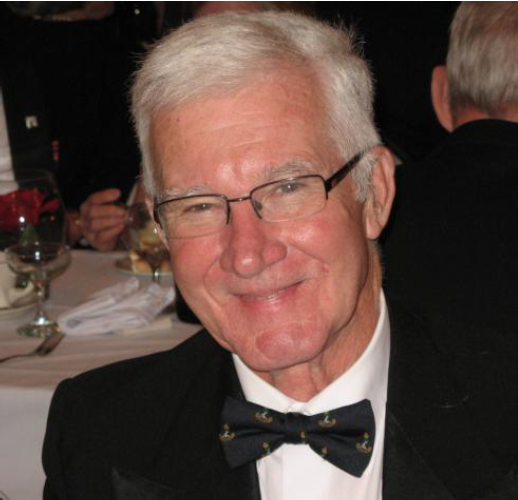 Captain (N) (Ret’d) M. Braham, CD – Mike Braham is a graduate of the Royal Military College (1965) and a former naval officer and senior official with DND. He has an abiding interest in military history.