Introduction:
Igor Sergeyevich Gouzenko (January 13, 1919 – June 28, 1982) was a cipher clerk for the Soviet Embassy to Canada in Ottawa. He defected on September 5, 1945, with 109 documents on Soviet espionage activities in the West. This forced Prime Minister Mackenzie King to call a Royal Commission to investigate espionage in Canada.
Gouzenko exposed Joseph Stalin’s efforts to steal nuclear secrets, and the technique of planting sleeper agents. The “Gouzenko Affair” is often credited as a triggering event of the Cold War.
Background:
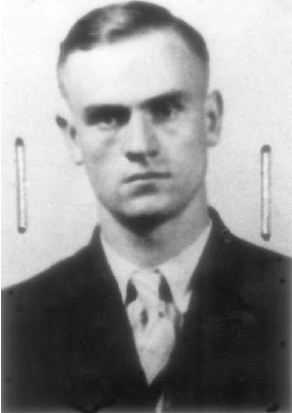
Igor Gouzenko
Gouzenko was born on January 26, 1919, in the village of Rogachevo not far from Moscow. At the start of World War II, he joined the military where he trained as a cipher clerk. In 1943, he was stationed in Ottawa, where for two years he enciphered outgoing messages and deciphered incoming messages for the GRU (Soviet Military Intelligence). His position gave him knowledge of Soviet espionage activities in the West.
Defection: In 1945, hearing that he and his family were to be sent home to the Soviet Union he decided to defect. On 5 September 1945 at approximately 8:00 pm, Gouzenko, armed with 109 highly sensitive documents, left the Soviet Embassy for the last time. He initially went to the Royal Canadian Mounted Police, but the RCMP officers on duty refused to believe his story. He then went to the Ottawa Journal newspaper, but the paper’s night editor was not interested, and suggested he go to the Department of Justice – however nobody was on duty there when he arrived.
Terrified that the Soviets had discovered his duplicity, he went back to his apartment and hid his family in a neighbour’s apartment across the hall for the night. Gouzenko watched through the neighbour’s keyhole as a group of Soviet agents broke into his apartment. They began searching through his belongings, and only left when confronted by Ottawa police.
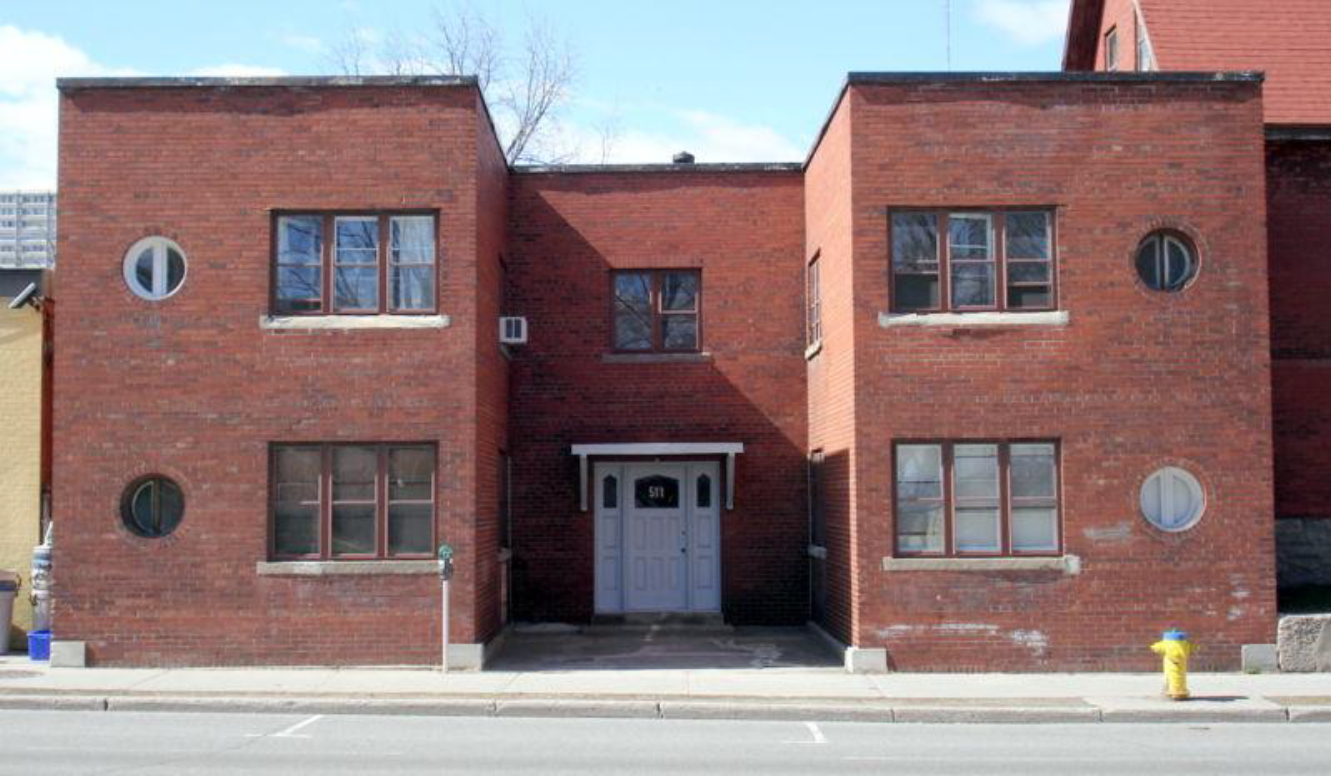
Gouzenko’s 511 Somerset St. Apt. in 2007
The next day Gouzenko was able to find contacts in the RCMP who were willing to examine the evidence he had removed from the Soviet embassy. Gouzenko was transported by the RCMP to the secret “Camp X”, located in present-day Oshawa. Camp X had been used during World War II as a training station for Allied undercover personnel. While there, Gouzenko was interviewed by investigators from Britain’s MI5, and from the US Federal Bureau of Investigation.
It has been alleged that, Prime Minister William Lyon Mackenzie King initially wanted nothing to do with him. Even with Gouzenko in hiding and under RCMP protection, King reportedly pushed for a diplomatic solution to avoid upsetting the Soviet Union, still a wartime ally and ostensible friend.
Ramifications:
The evidence provided by Gouzenko led to the arrest of 39 suspects in Canada and 18 were eventually convicted of a variety of offences. Among those convicted were Fred Rose, the only Communist Member of Parliament in the Canadian House of Commons; Sam Carr, the Communist Party’s national organizer; and scientist Raymond Boyer.
A Royal Commission of Inquiry to investigate espionage, headed by Justice Robert Taschereau and Justice Roy Kellock, was conducted into the Gouzenko Affair and his evidence of a Soviet spy ring in Canada. It alerted other countries around the world, particularly the United States and the United Kingdom, that Soviet agents had almost certainly infiltrated their nations as well.
Gouzenko’s information assisted greatly with ongoing espionage investigations in Britain and North America. His testimony is believed to have been vital in the successful prosecution of Klaus Fuchs, the German communist physicist who emigrated to Britain and who later stole atomic secrets for the Soviets. It is also likely that his information helped in the investigation of Julius and Ethel Rosenberg in the U.S. Gouzenko’s information likely also assisted with the investigation which eventually led to the discovery of vital Soviet spies such as Donald Maclean, Guy Burgess, Kim Philby, Anthony Blunt, and John Cairncross (the so-called Cambridge Five), as well as Alan Nunn May.
Later Life:
Gouzenko and his family were given another identity by the Canadian government out of fear of Soviet reprisals. Gouzenko lived the rest of his life under the assumed name of George Brown. Little is known about his life afterwards, but it is understood that he and his wife settled down to a middle class existence under their assumed name in the Toronto suburb of Clarkson. They raised eight children together. He was, however, involved in a defamation case against Maclean’s for a libelous article written about him. The case was eventually heard by the Supreme Court of Canada.
Gouzenko wrote two books, This Was My Choice, a non- fiction account of his defection, and the novel The Fall of a Titan, which won a Governor General’s Award in 1954.
Gouzenko also appeared routinely on television to promote his books, always with a hood over his head.
Gouzenko died of a heart attack in 1982 at Mississauga. His grave was not initially marked. Svetlana died in September 2001 and was buried next to him. It was only in 2002 that the family put up a headstone.
In June 2003, the city of Ottawa and in April 2004, the federal government put up memorial plaques in Dundonald Park commemorating the Soviet defector. It was from this park that RCMP agents monitored Gouzenko’s apartment across the street the night men from the Soviet embassy came looking for him.
 Captain (N) (Ret’d) M. Braham, CD – Mike Braham is a graduate of the Royal Military College (1965) and a former naval officer and senior official with DND. He has an abiding interest in military history.