Skip to content
Non-Fiction Books About the Cold War in Canada
- Give Me Shelter: The Failure of Canada’s Cold War Civil Defence by Andrew Burtch (Canadian War Museum historian)
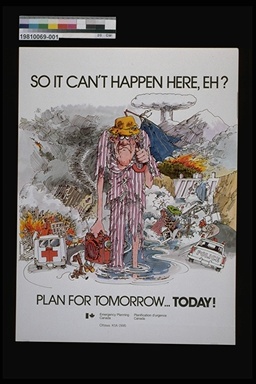
- People called it the Cold War, the era when the world seemed to teeter on the edge of an atomic Armageddon. It was a harrowing time of home fallout shelters and public service announcements telling frightened citizens to “duck and cover” in the event of a nuclear holocaust.
- Faced with potential annihilation, ordinary Canadians reacted with general indifference, while there was confusion regarding jurisdiction among the various levels of government.
- Give Me Shelter: The Failure of Canada’s Cold War Civil Defence (UBC Press, 2012) by Canadian War Museum historian Andrew Burtch, winner of this year’s C.P. Stacey Award for most distinguished book on Canadian military history, tells the story of Canada’s half-hearted, haphazard attempts to deal with the threat of nuclear war in the two decades following the end of the Second World War.
- In Canada, serious planning began in the late 1940s. “All across the Western alliance,” says Burtch, the Museum’s historian for the post-1945 period, “it seemed reasonable that governments should have some kind of program in the advent of nuclear attack.” But the specifics of the program changed as nuclear weapons evolved. The initial model, he says, “was the London Blitz applied to the nuclear age” — individuals were trained as firefighters, air-raid wardens and nurses on the assumption that enough people would survive the initial attack and could then help the wounded and fight the fires. By the early 1950s, however, with the development of more powerful bombs — the “city killers” — the emphasis was on evacuation. And the advent of intercontinental ballistic missiles in the late 1950s called for a “stay put approach. You built a shelter to put some protection between your family and atomic fallout.”
- The entire civil defence program, says Burtch, was “dogged by apathy. In the dark days of the Korean War or the Cuban missile crisis, tension was high” and so was speculation. But unless confronted by crisis, people showed no concern. “Once the emergency passed, and things looked like they were under control, their interest faded almost immediately.” When an ambitious evacuation exercise in Calgary had to be cancelled because of a heavy snowfall, “the mayor said if the weather had been that bad the Soviets wouldn’t have attacked anyway.” Differing levels of government squabbled over who should pay for civil defence or whether to be involved at all. “British Columbia and Alberta were really up on it in the 1950s. Ontario and Quebec were not, and refused all funding.”
- Responsibility for civil defence was kicked from ministry to ministry. After 1968, the Cold War rhetoric began to cool, the sense of urgency faded altogether and civil defence was forgotten. But, says Burtch, it never entirely disappeared. “Public Safety Canada,” the government ministry in charge of protecting the safety of Canadians today, “is in one way a direct offshoot of it.”
- The C.P. Stacey Award is presented by the Canadian Committee for the History of the Second World War and the Canadian Commission for Military History. It recognizes the year’s most distinguished publication on the 20th-century military experience. In winning this prize, Burtch joins a number of current and previous colleagues at the War Museum. “Tim Cook, Dean Oliver, Jack Granatstein . . . I feel like I’m carrying on a bit of a tradition,” he says.
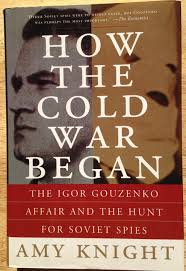
 How the Cold War Began by Amy W. Knight
- How the Cold War Began draws on newly declassified intelligence files to examine one of the twentieth century’s most influential spy cases as well as its role in generating the Cold War, discussing the defection of a cipher clerk who revealed a Soviet espionage network in North America less than a month after the atomic bombing of Japan. Amy’s website is worth perusing.
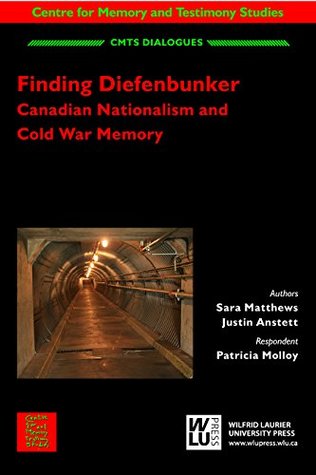
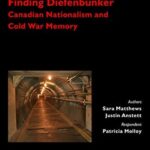 Finding Diefenbunker: Canadian Nationalism and Cold War Memory by Sara Matthews, Justin Anstett & Patricia Molloy (Contributor).
- The text discusses the legacy of the Cold War in Canada by looking at Prime Minister Diefenbaker’s “Diefenbunkers”—eleven nuclear fallout shelters constructed in secret in the late 1950s to protect the Canadian national and provincial governments from a nuclear strike. While many of these sites have fallen into disrepair or been sold off, one such site has recently been repurposed as “Canada’s Cold War Museum” with the explicit purpose of fostering “interest and critical understanding of the Cold War.”
- The text questions how the site, its museumological apparatus, and the community curation of various rooms in the museum, constructs a “Cold War” for use in Canadian memory; questions the validity of considering the Diefenbunker as a memory site, following Pierre Nora’s seminal concept; and explores the role of fictions in the interactive exhibits that aim to engage Canadian youth—in particular—in the issues of nuclear war, emergency measures, and the role of civil defence. The museum and its displays are interrogated for their performance of and possibilities for inscription, re-inscription, and resignification of Canadian cultural memory.
- Life After Doomsday by Bruce Clayton
- A Survivalists Guide to Nuclear War and Other Major Disasters
- Dave Peters’ Note: Whether you agree with the author or not, this is an illuminating read for the basic information it contains about the effects of nuclear weapons and what can be done to attempt to survive in the aftermath of a nuclear war.
- Excerpt: “There is no need to lie to people about the effects of a nuclear war. The truth is bad enough. The damage done by making the threat seem worse than it really is cannot be easily dispelled. The exaggerated tales of total annihilation convince people that survival is impossible. This is not true. For most Americans, survival of at least the first few weeks following a nuclear attack is not only possible, it is almost unavoidable. With careful preparation, any family or small group of people can insure its own survival under such conditions and also through the long period of recovery to follow.”
- Underground Structures of the Cold War by Paul Ozorak
- Paul Ozorak has written many books on the general theme of underground bunkers both in Canada and elsewhere in the world, as well as about lessor known military facilities. He was at one time a contributor to the Diefenbunker’s exhibits. He currently lives in the Ottawa area.
- Cold War Canada: the Making of a National Insecurity State, 1945-1957, by Reg Whitaker and Gary Marcuse
- Misguided Missiles, Canada, the Cruise and Star Wars by Simon Rosenblum
- Canada and the Cold War by Reg Whitaker and Steve Hewitt
coldwarincanada2026-02-08T19:39:34-05:00
Share This Story, Choose Your Platform!
Page load link