
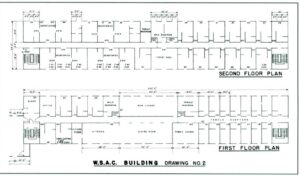
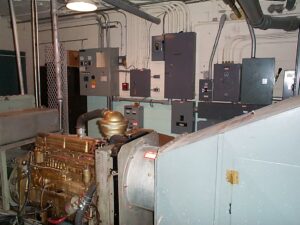
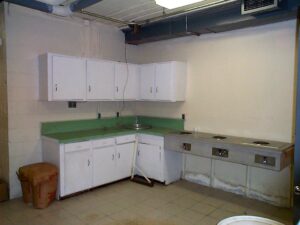
The Central Relocation Units were equipped with the basic materiel supplies needed to perform their support-of-the-CEGHQ role. Their fallout protected locations (and decontamination capable entrances) had basic operational capabilities, rudimentary sleeping and food preparation facilities, water, rations and operations supplies. Diesel electrical power generators and fuel tanks would have permitted them to remain functional for at least two weeks. They were supported by VHF radio and telephone equipment to ensure they remained in constant contact with the CEGHQ. CRUs were a functional extension of the CEGHQ and were located in separate, lightly protected facilities some distance away from it. Departmental groups assigned to the CRUs operated independently of each other, taking their direction from senior departmental officials working in the CEGHQ. Their tasks were to provide technical advice and operational support to the CEGHQ, to undertake tasks specified by policy analysts, and to carry out departmental action to put into effect decisions and directions emanating from the CEGHQ. At least one of the CRUs would have had an additional role as the site for a duplicate Governor-in-Council and the requisite senior support staff. It may have had to back up the CEGHQ should that facility have been severely damaged or lost contact with its various subordinate headquarters. There were six CRUs in the Ottawa area. They were within VHF radio contact range of the CEGHQ and physically located within very lightly fallout protected federally owned facilities. Two of them were in custom designed buildings (Carleton Place and Kemptville). These facilities were mentioned in a memo by the then Clerk of the Privy Council R.B. Bryce as covert locations to train public servants for potential duties in the CEGHQ. Anotated-Bryce-VRU-Memo
 |
 |
 |
|---|---|---|
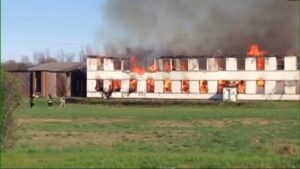
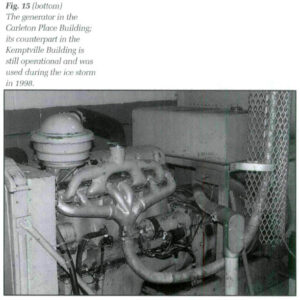
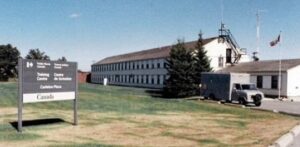
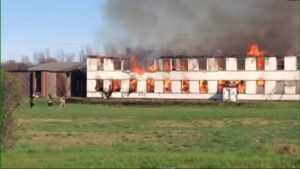
| Abandoned Carleton Place CRU On-fire in 2017 | Carleton Place CRU Emergency Generator | Carleton Place CRU before the fire. In the late 1990s it had been ‘converted’ to a federal training centre (but the basement was still unchanged as a somewhat deteriorated fallout shelter well after). |
 |
 |
|---|
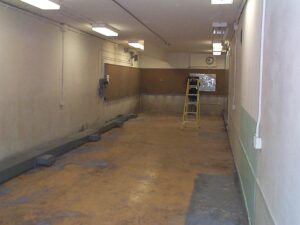
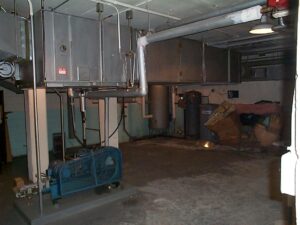
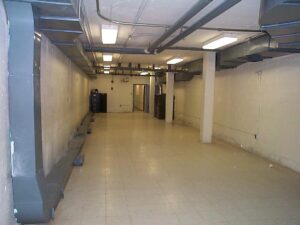
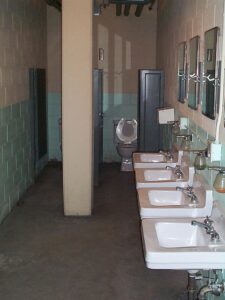
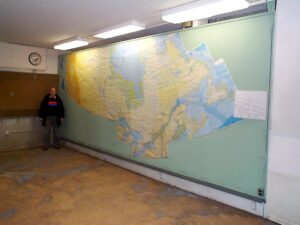
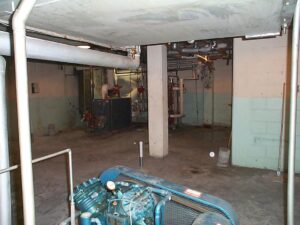
Kemptville CRU The basement was fitted out as a fallout shelter for about 80-100 officials for about 30 days. The siding and window shutters were asbestos board to protect against the thermal flash of an H-Bomb exploding over Ottawa.
 |
 |
 |
|---|---|---|
 |
 |
 |
 |
 |
 |
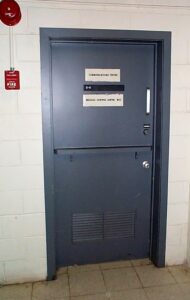 |
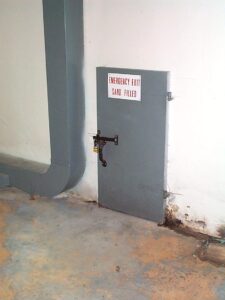
Interior Images of the Kemptville Central Relocation Unit (above)