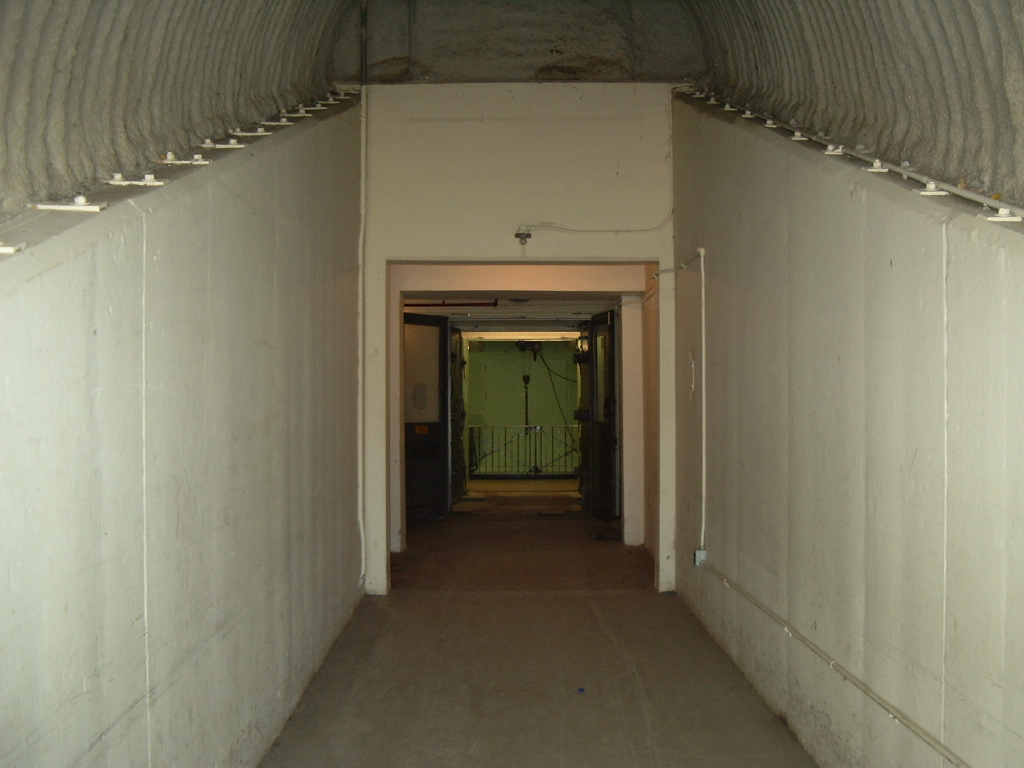
In a nuclear attack on North America both communications and transportation links from the national down to the local level were likely to have been severed or at least severely disrupted. For this reason the continuity of government plan envisaged the provinces becoming “regions.” As a region, a province would have been administered by an emergency government which has the federal /provincial authority to operate independently should it become isolated due to physical or communications disruption. Regional emergency government would then have become a significant link in the chain of continuity of government. Regional boundaries were coincident with provincial boundaries. Despite the inclusion in regional government of specific federal elements located in the provinces and territories, the major component of government would have been that of the province concerned. Thus provincial considerations were of major importance in establishing each Regional Emergency Government Headquarters (REGHQ). The primary purpose of REGHQs was to provide fallout protected, self supporting facilities outside potential target areas and away from the seats of government, and to plan to relocate essential staff to them during the readiness phase.
 |
 |
 |
|---|
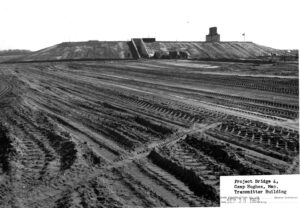
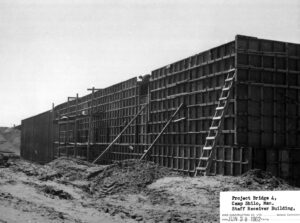
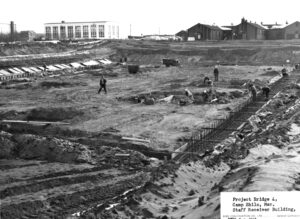
Construction Photos of the REGHQ Site at CFB Shilo, Manitoba (Early 1960s)
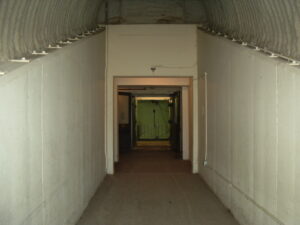
REGHQ Shilo entrance |
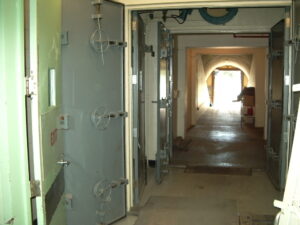
REGHQ Shilo vault door |
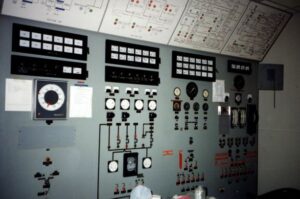
REGHQ Shilo building systems control panel |
|---|---|---|
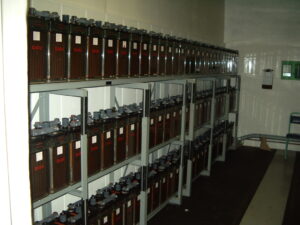 |
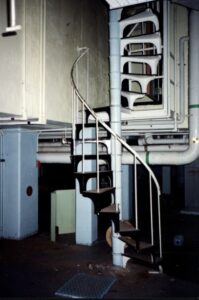
REGHQ Shilo spiral staircase to filters |
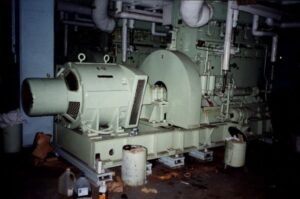
Mirlee Generator for REGHQ Shilo |
A REGHQ comprised regional (provincial) government, including elements of the provincial and federal governments, which would have formulated policy and directed essential operations during the survival phase, a Canadian Forces element which would have controlled all military resources assigned to assist the civil authorities in the region and provided the REGHQ with nuclear attack data, a DND-operated military communications facility which would have provide regular and emergency communications. The organization of an REGHQ included the Executive Group (the Lieutenant Governor-in-Council comprised the Lieutenant-Governor and a minimum of four Ministers one of whom probably would have been the Premier) and the Executive Support Group consisting of an Operations Directorate (public protection services/functions such as fire brigades, police, urban search and rescue, etc.), representatives of resource agencies, construction and maintenance engineers, food and supply experts, medical resources officers, etc., various advisers and Canadian Forces elements.
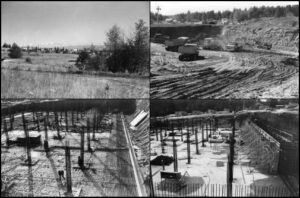
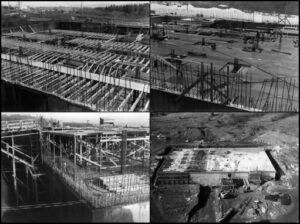
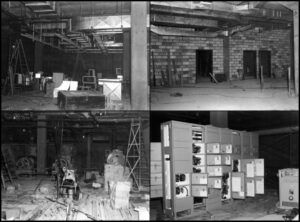
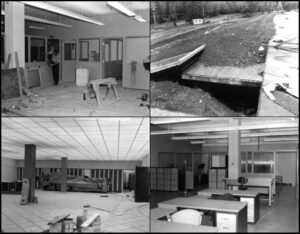
NANAIMO REGIONAL EMERGENCY GOVERNMENT HQ (Construction Photos)
These photos are taken from a collection of several hundred produced for the DND during the construction of the Regional Emergency Government Headquarters, otherwise known as the ‘Staff/Receiver Building, Operation Bridge’ in Nanaimo, British Columbia. The complete collection is presently held in the archives of the Central Emergency Government Headquarters (The Diefenbunker, Canada’s Cold War Museum) in Carp Ontario. The collection was curated March 7, 2004 by Doug Beaton (a retired Parks Canada conservation expert), who for two decades volunteered as the Museum’s Collections Manager and was largely responsible for the creation, growth, documentation and maintenance of its Archives, Artifacts and Library Collections.
 |
 |
 |
 |
|---|---|---|---|
| Nanaimo REGHQ Construction 1961-63 Clockwise Index #1 View looking northeast prior to construction Sept. 5, 1961 #2 View looking southwest during excavation October 2, 1961 #3 View looking south southeast during pad construction November 6, 1961 #4 View looking south during wall construction – November 20, 1961 |
Nanaimo REGHQ Construction 1961-63 Clockwise Index #5 View looking east during construction of 100 level December 4, 1961 #6 View looking east during construction of 100 level December 18, 1961 #7 View looking north during construction of 200 level January 29, 1962 #8 Aerial view looking west February 19, 1962 |
Nanaimo REGHQ Construction 1961-63 Clockwise Index #9 Interior view on level 100 March 12, 1962 #10 Interior view on level 200 May 7, 1962 #11 Interior view towards generators May 28, 1962 #12 Interior view of power panel, Room 1001, June 25, 1962 |
Nanaimo REGHQ Construction 1961-63 Clockwise Index #13 Interior view, installation of office areas September 24, 1962 #14 Exterior view, covering of front entrance November 5, 1962 #15 Interior view, outfitting cafeteria December 17, 1962 #16 Interior view, installation of office furniture, February 25, 1963 |
Six provinces (BC, AB, MB, ON, QB, NS) had ‘proper’ custom designed and constructed facilities located on military bases remote from their capitals. Construction of the remainder was stopped when the Trudeau (the 1st) government came into power in the 1960s and only so-called interim non-protected facilities were put in place for the remaining four provinces (SK, NB, PEI, NL).
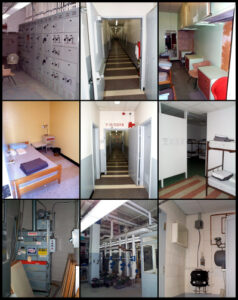
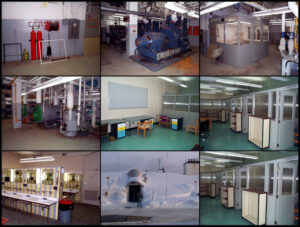
REGHQ Valcartier, QB Diefenbunker Volunteers Tour March 2002
 |
 |
 |
|---|---|---|
| Photos taken by Doug Beaton during tour of the facility post its Y2K significant modifications. Also touring were Bob Borden, Dave Peters and Paul Lauson. | REGHQ Valcartier tour photos 2 | REGHQ Valcartier tour photos 3 |
REGHQ Borden
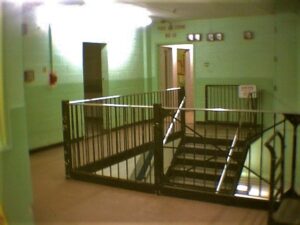
Main Entrance “Reception” Area / Stairwell in a Typical REGHQ (CFB Borden, Ont)
REGHQ Debert, Nova Scotia…The following is an article about CFS Debert, NS from a telecoms point-of-view. This is from Station Warrant Officer R.J. Whitaker’s Website which unfortunately is no longer active.
CFS Debert – The End of an Era
“CFS Debert is a DISO unit under 72 Communications Group, Halifax. Its primary role was the operation and maintenance of an Automated Defence Data Network (ADDN) Communications Node. It is also the host station to three lodger units: the Central Medical Equipment Depot (CMED), the NATO Integrated Communications System (NICS), and the Regional Emergency Government Headquarters (REGHQ) until its closure in 1994.
The Station of Debert and in particular the Communications Branch was restructured in July of 1995 under the direction of DISO with an impending “closure” of the Station during APS 96. To date, there still is no order for the closure of CFS Debert, but rather an ongoing major restructuring and downsizing of personnel due to the closure of the ADDN node.
Communications and Electronics Branch personnel were the backbone operation of CFS Debert and employed approximately 82 Rad Ops, Tel Ops and technicians in support of the ADDN node. The ADDN was the mainstay of the Strategic Message Switching System(SMSS) and provided round-the-clock secure data communications for DND. The ADDN was comprised of three Nodes located at Debert, Penhold and Borden.
User terminals (COMCENS) accessed the system via concentrators which were connected to one of the three Nodes. Also connected to the Debert Node was the Maritime Semi-Automated Exchange (MSAX) Node from Mill Cove. TheNICS system and the American AUTODIN were linked via the Debert concentrator.
CFS Debert Node, housed in an underground bunker, a “Diefenbunker”, also provided operations staff as required to Zone Emergency Government Headquarters (ZEGHQ) in Truro, Sidney and Kentville through user end terminals, until it was closed. The ADDN at Debert had remote capabilities via radio, accomplished with the use of a High Frequency Gateway facility. The ADDN was accessed normally byLong Range Communications Terminals (LRCT), by deployed Intermediate Range Communications Terminals (IMRCTs) and by Mobile Radio Teletype Detachments (CRTTZ).
As the implementation of the Newsdealer system became a reality, the ADDN Nodes became antiquated and manpower intensive for operations in today’s military, due to off-the-shelf systems which are much more cost effective. Cost effectiveness for today’s military forced the restructuring of communications systems, operations and manpower at Debert, but also throughout DISO, other commands and organizations.
With restructuring, personnel at CFS Debert, normally employed within the Node or its connected facilities were posted to new locations and the equipment declared surplus. The buildings which used to house a multitude of military personnel are now void of people. The normal hub-bub of noise and movement of people throughout the hallways and byways of the SR Bunker ceased almost immediately as APS 95 struck. The technicians, mostly Rad Tech 221, were left to clean up twenty some odd years of equipment, maintenance projects, paperwork, outdated publications and general system equipment.
At Debert, the few remaining technicians worked long and hard to ensure the right equipment and materials were salvaged, documented, tagged and returned to the rightful LCMMs, while still organizing the major pieces of equipment for surplus action. In its heyday, Node Debert was home to a great many Tel Ops, some with more than one trip down home to work and enjoy the Nova Scotian “Downhomer” way of life.
The Rad Ops who managed and slaved in the Facility Control Centre now have a taste of the Nova Scotian country side for that “Downhomer” feeling. The Eastern Gateway, “The Gateway to the World”, was also under the restructuring plan to relocate from the SR Bunker on the Station itself, to the Great Village Transmitter Site. The move of the Gateway, with both operators and technicians working diligently together, was completed under budget and ahead of schedule, proving that the dedication, professionalism and team spirit of our soldiers is alive and well in Debert.
It’s hard to believe that another era in the lifespan of CFS Debert is coming to a close. Since its beginnings at the start of WW II, a mere 30 square miles of land, to its present day size of approximately one square kilometre with a 600 yard range, the presence of a military organization has been housed at Debert. The loss of the Station’s ADDN Node and its ancillary area maintenance responsibilities, proved to be the final turning point in the lifespan of this unit. For those who have served here, lived here and grew here; as our motto states, stay “SHARP AND SURE!” ….. Revised: 24 Oct 96″
 |
 |
 |
 |
|---|---|---|---|
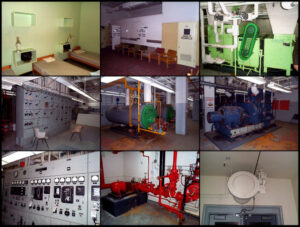
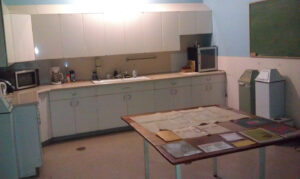
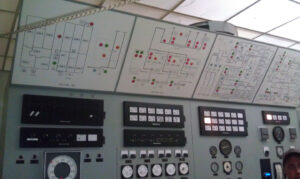
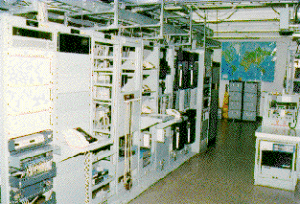
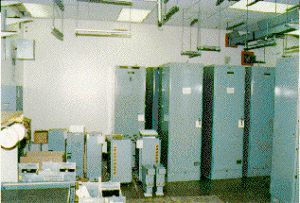
| REGHQ Debert Medical Inspection Room (MIR) | REGHQ Debert Environmental System Controls | REGHQ Debert equipment | REGHQ Debert equipment |
 |
 |
 |
|
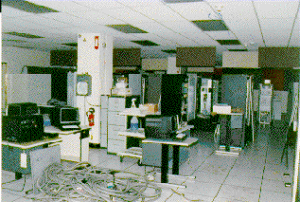
| REGHQ Debert equipment | CREGHQ Debert equipment | REGHQ Debert equipment | REGHQ Debert equipment |
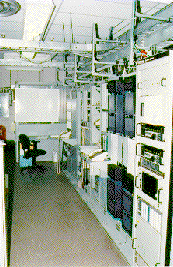
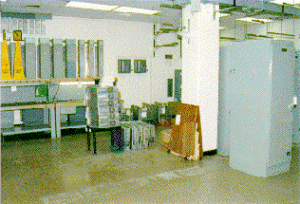
Above are Telecoms Equipment Images at the Debert REGHQ
EXTRACTS FROM THE DEBERT HISTORICAL SOCIETY WEB SITE
The Debert Military History Society (DMHS) began in November of 1997 when a small group of concerned citizens felt it was important to preserve the military history of the former Camp Debert (16X, RCAF/RAF) and to restore the former CFS Debert Museum which closed in 1995 when the military pulled out. Built in 1939-40, Debert was a staging area for an estimated 30,000 soldiers being shipped overseas to fight for our freedom in World War II. For many of them, Debert was the last Canadian Base they would ever see. Many stories and poems (some not too complimentary!) were written about Debert. DMHS was incorporated as a not-for-profit organization in March of 1998 and planning for a museum got underway almost immediately. On June 1st 1998, a lease was signed with the Colchester Park Development Society (CPDS) for the use of Bldg.213, a war-time “H-hut” and work is presently being carried out to have the museum open during the summer tourism months. The museum is quickly becoming a prominent tourist attraction and is advertised nationally in Legion Magazine and other tourist brochures. A summer student is usually hired as a guide for visitors to the museum and to help research and record war stories from veterans and local residents. Fund-raising is carried out by membership drives and various other activities. Visitors are often awed by the huge expanse of the military encampment and the stories about it.
In the early 1960s when Debert was selected for the Nova Scotia Regional Emergency Government Headquarters “Bridgesite”. (While the CEGHQ at Carp, Ont. was the E.A.S.E. site but irreverently called the ‘Diefenbunker’ after the Prime Minister at the time, the regional site were always referred to as bridgesites by the military). By the late 1960s the primary lodger unit at CFS Debert was 720 Communications Squadron. There were supporting radio transmitter and receiver stations built close by at Masstown and Great Village. (As was the case at all of the REGHQs, supporting telecommunications facilities were located ‘off site’ for protection purposes). Debert also had significant explosives storage magazines, various training facilities and a medical supplies deport which stores a number of emergency and N.E.S.S. ‘kits’.
What has become of the REGHQs today?
So what has happened at the six former REGHQ sites that were located on military bases across the nation? Click on the links below to see current Google views of these abandoned sites…
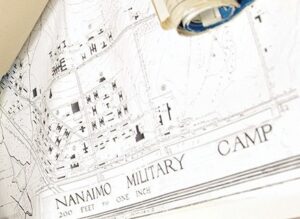 REGHQ Nanaimo, BC – Sealed in 1999, the Nanaimo Military Camp now occupies the land. Located just off the Fifth Street exit from highway 19. The Nanaimo REGHQ was one of the first such buildings to be sealed by the military after the EGFs program ceased to exist in the lates 1990s.
 |
 |
|---|---|
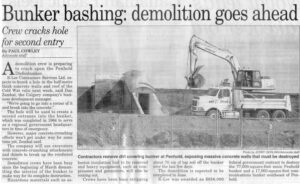
| News story about demolition of REGHQ Penhold | |
 |
 |
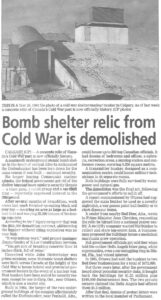 |
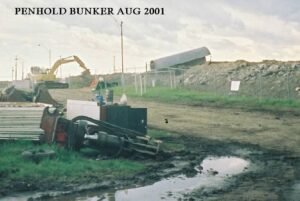
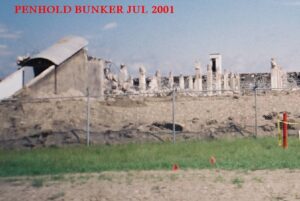
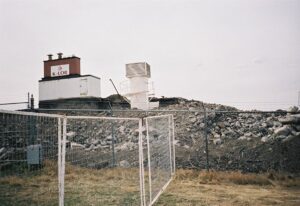
REGHQ Penhold, AB – In the late 1990s/early 2000s the facility was sold to a local (farmer?). Then it appeared that an ‘undesirable’ organisation wanted to purchase it. Rather than allow that the federal government bought it back (for many 1000s of $ more than they originally sold it) and then spend hundreds of thousands more $ destroying it! See the following article.
REGHQ Shilo, MB – Early in 2001 Dave Peters and Bob Borden visited CFB Shilo and were allowed to identify Furniture and Equipment that we wanted to preserve for use in the Diefenbunker Museum. The Base Staff fully cooperated in arranging to rescue and store these items until a year or so later when Laurysen Kitchens subsidized sending a tractor trailer to Shilo MB from Carp to fetch them. These items have contributed greatly to the reconstruction of various functional rooms in the Museum.
REGHQ Borden, ON – In the late 1990s a group of bunker volunteers visited the Borden bunker to attempt to acquire some of the F & E (and anything else that would help us “restore” the look of the Carp bunker). We only acquired a few items that trip but on later trips other volunteers were more successful, eventually acquiring a Mirlee generator (similar to the original generators in the Carp bunker) which was installed in the bunker 100 level machine room a few years later. Shortly after the last visit by our volunteers the Borden bunker was sealed.
REGHQ Valcartier, QB – One spring day in the early 2000s a ‘bunch’ of bunker volunteers drove to Valcartier, QB to have a look at the REGHQ there. Myself, Doug Beaton and Bob Borden were part of this group. Word was that the building was in quite good shape and was still being used as spare accommodation by the Base. When we got there we were fortunate to be taken on a tour by an officer of the Base (who seemed quite puzzled by our interest in the facility but never-the-less took us on a comprehensive tour). Unfortunately the building had been extensively modified in readiness for the Y2K emergency planning preparations, so that many areas of interest to us had been unrecognizably altered from their original configuation. Before we returned to Ottawa that afternoon (in a blinding snowstorm) we attempted to set up future cooperation with the individual in charge of the bunker but to no avail. We were trying to see if we could acquire some of the heavier kitchen equipment (which was virtually identical to that the military had stripped out of the Diefenbunker. We did observe that there were two CBC radio studios, one for english and one for french which was interesting.
From viewing the Google maps’ satellite view the base appears to be in the process of removing the earthen side and top cover from the building. Here is an interesting article in a recent (June 2010) from a website (QuebecUrbain) about the Valcartier bunker. (It includes a 1975 video with some inside shots – one of the telephones on the main conference room which would have been a provincial/regional-level equivalent to the Diefenbunker’s War Cabinet room).
REGHQ Debert, NS and Street View Front and Street View Side for profile views
CFS Debert was closed in the mid-1990s and decommissioned in 1998 with remaining military facilities being transferred to a local development authority named “Colchester Park”. The former regional bunker facility has gone through the hands of a variety of private owners and is currently an ‘historical entertainment destination’ in Nova Scotia. “From the historic to the radically fun, Enter the Bunker has something for the whole family”. They have tours, escape rooms, videos games, laser tag and they host birthday parties, team outings and corporate events.
No matter the season, no matter the mood, the Debert Diefenbunker has what you need to make a good day radically awesome!