Skip to content
Personalities of Cold War Canada
- Igor Gouzenko, Soviet defector who alerted Canada and the West to the rise of the Cold War
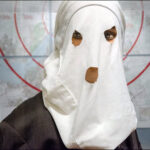 Gouzenko was a cypher (code) clerk at the USSR embassy in Ottawa Canada. He defected on September 5, 1945 with 109 documents reveling the Soviet’s espionage activities in the West. In doing so he exposed the USSR’s spying activities aimed at stealing nuclear secrets as well as the technique of planting sleeper agents. His defection is often credited as a triggering event of the Cold War, with many journalist and historians remarking that the Cold War began in Ottawa” and that Gouzenko’s actions “awakened the people of North America to the magnitude and the danger of Soviet espionage”.
- This 2013 article written by part time journalist Connie Higginson-Murray. Connie is one of the original group of founders of the Diefenbunker, CCWM, in Carp, ON.
- John Diefenbaker:
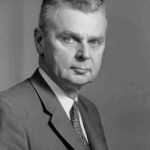 Throughout his term as Prime Minister, John Diefenbaker struggled to determine whether Canada should acquire nuclear weapons. Minister of Defence George Peakes recommended that Canada integrate its air defences with the United States in order to present a united front designed to protect both nations. The North American Aerospace Defence Command policy (NORAD) was approved by Diefenbaker in early 1957. Although NORAD represented a major defence commitment, the decision was made without discussion with Cabinet or the Defence Committee. He also authorised the construction of the CEGHQ / “Diefenbunker” and other nuclear-resistant Emergency Government Headquarters.
- Lester “Mike” Pearson:
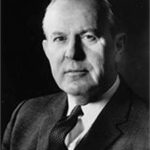 Canadian (Liberal) politician and diplomat who served as prime minister of Canada (1963–68). He was prominent as a mediator in international disputes, and in 1957, he was awarded the Nobel Peace Prize for his creation of the United Nations Emergency Force (UNEF) in Egypt during the 1956 Suez Crisis. He authorised the arming of the Canadian Army and Royal Canadian Air Force with “battlefield” nuclear weapons supplied by the USA.
- Lieutenant Colonel Ed Churchill, project manager for the CEGHQ / “Diefenbunker”:
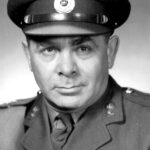 The April 1967 edition of the Canadian Forces Magazine (The Sentinel) featured a story about the illustrious career of Lt. Colonel Edward Churchill (Royal Canadian Engineers). Noted as a ‘get-the-job-done-on-time’ kind of military engineer, Colonel Churchill built forward airfields in Italy during WW 2, Fort Churchill in the late1940s and bridges on the Alaska Highway in the early and mid 1950s. When next we hear of him, it was as the Project Manager for Canada’s EXPO 67 in Montreal where he was responsible for planning and supervising the complex construction phase of that very successful world exposition.
- Because of the secrecy surrounding the construction of the Bunker in the late 1950s and early 1960s there is this ‘gap’ in his career summary. In fact during that time he was the military’s Project Director for the construction of Project EASE (the codeword for the Bunker project). The E.A.S.E. Project was built on-time and on-budget from 1959 to 1961 for about $20 millions (that would be about $170 million in 2020). Fitting it up with the telecommunications equipment (the STRAD, etc.) required to achieve its operational functions appears to have cost a further $15 to $20 million, Its construction so expeditiously was greatly facilitated by the use of the Critical Path Method of project management and control. CPM in such projects had been pioneered during the construction of Trident submarines a few years prior. Later on in the 1960s it became the go-to tool for the management of such massive and complicated projects.
- Fred Rose, Communist Member of the Canadian Parliament
coldwarincanada2026-01-31T19:18:34-05:00
Share This Story, Choose Your Platform!
Page load link
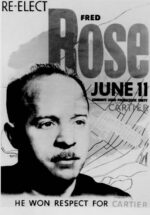 Rose was a Polish-Canadian politician and trade union organizer, best known for being the only member of the Canadian Parliament to ever be convicted of a charge related to spying for a foreign country. A member of the Communist Party of Canada and Labor-Progressive Party, he served as the MP for Cartier from 1943 to 1947. He was ousted from his seat after being found guilty of conspiring to steal weapons research for the Soviet Union.