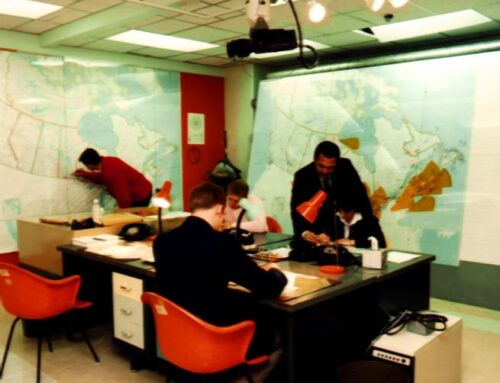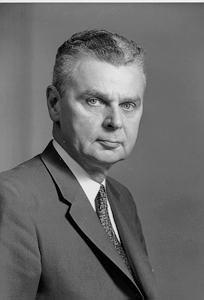

The War Cabinet would have had ministers responsible for:
- Defence
- Science & Technology
- Communications (incl CBC)
- Industrial Production
- Housing
- Transportation
- External Affairs
- Agriculture
- Finance
- Fisheries & Oceans
- Solicitor General (RCMP/CSIS)
- Justice
- Health & Social Services
- Energy, Mines & Resources
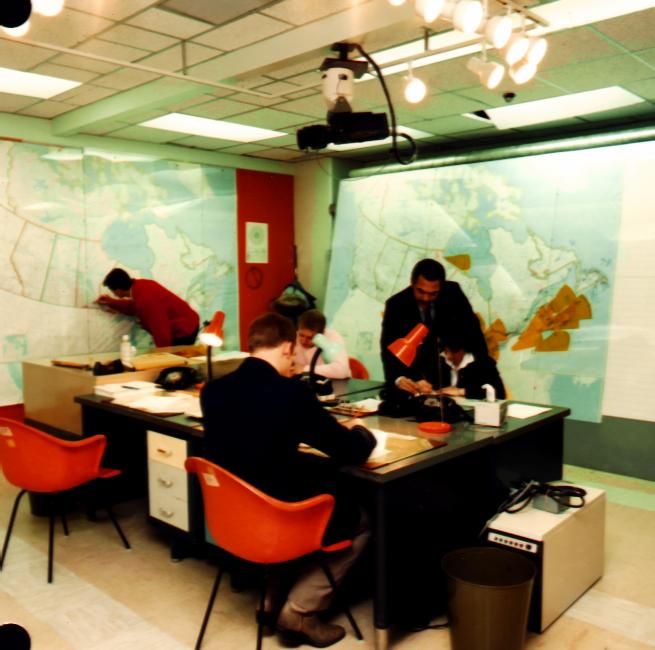
The Cabinet would have been briefed on the war situation and the impact of the attack of Canada and Canadians by staff of the Military and Civil Situation Centres and by departmental officials at least twice daily (more often if the situation required more up-to-date information).
Policy developed and decisions made would have enabled the federal government to coordinate the national response, specifically with respect to evacuation, relocation, rescue, and reentry operations. Cabinet direction would have been promulgated though a variety of regional departmental offices and the other Emergency Government Headquarters located in the regions/provinces.
An informed and functioning federal cabinet would also have allowed the central government to begin the task of trying to plan and coordinate the national post-attack national recovery effort (as much as this would have been possible in the aftermath of such a horrendous event).
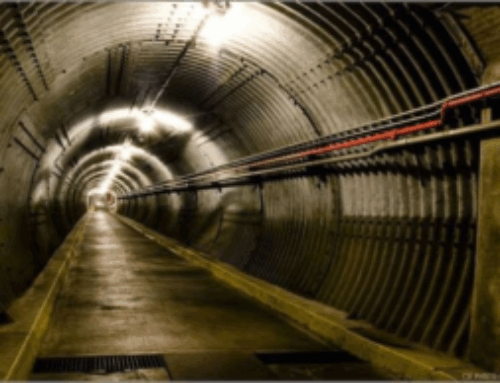
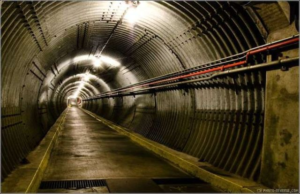
It is likely that not all of the cabinet would have been located in the Carp facility. Some members would have been dispersed among six underground Central Relocation Units elsewhere in the Ottawa Valley.
– Dave Peters – 19 Feb 98