Introduction:
The Cold War is generally considered to cover the period from the end of the Second World War in 1945 to the collapse of the Soviet Union in 1991. It was characterized by a nuclear standoff between the two superpowers—the United States and the Soviet Union—and their allies.
Although only a relatively short period in human history—approximately 45 years— the Cold War era was one of the most dynamic and eventful in human history. Wars were fought, empires collapsed, colonialism disappeared, Soviet-style communism rose and fell, and space exploration and competition flourished and culminated in the landing of man on the moon—all under the malignant threat of a nuclear conflagration that had the potential to end life on earth as we know it.
The good news from the Cold War is that there was no nuclear conflict. The bad news is that nuclear arsenals still exist in what is arguably a less stable global environment.
Nuclear Weapons:
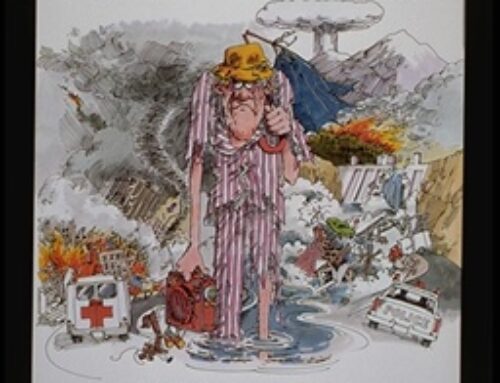
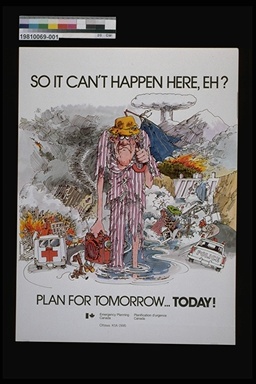
The War against Japan was brought to an end in August 1945 by the first and only uses of nuclear weapons, which were dropped on Hiroshima and Nagasaki. Their use precipitated an arms race between the Soviet Union, the United States and its allies for almost half a century, during which the size and deadliness of each others’ nuclear arsenals grew out of all proportion in what was once termed as the strategy of “Mutually Assured Destruction.”
Efforts to control the size and nature of these arsenals became the focal point for diplomacy between the two superpowers, with only the relatively limited success of ensuring that both sides maintained equal sized arsenals and did not possess an unequal advantage over the other!
A Three-Part World:
During the Cold War, the world evolved into essentially three camps—the Warsaw Pact, headed by the Soviet Union and those countries outside the Pact that for political, doctrinal or economic reasons lent their support to Moscow; the North Atlantic Treaty Organization (NATO), which followed the strategic lead of the United States and was supported by its own coterie of non-Alliance countries; and a group of non-aligned countries that managed to remain on the fence throughout the standoff. Principal among these non-aligned countries were the emerging superpowers of India and China, who remained relatively independent from either of the two main camps.
Wars:
Although the nuclear standoff prevented the ultimate conflict, there were a number of major, bloody conflicts during the Cold War involving the major players and/or their proxies. The consequences of many of those conflicts continue to plague the post-Cold War era.
Among the more important conflicts was the Korean Conflict, one of the few that included the active participation of China against the Western allies, and one which continues to fester today; the Vietnam War, which ended in a communist victory and cost over 60,000 American lives and had a huge impact on the American social fabric; a series of Arab-Israeli wars that served to heighten traditional hatreds in the region and that continue to serve as the basis for hatred and conflict; and the Soviet intervention
and ultimate defeat in Afghanistan (the “Soviet Vietnam”), which cast doubt on the much-vaunted Soviet military strength and has had an ongoing effect in the continuing conflict in that country.
The End of Colonialism:
Despite the British victories over communist insurgents during the Malayan Emergency and over nationalist rebels in the Mau Mau uprising in Kenya in the 1950s, both heralded the desire of colonized nations in Africa and Asia to seek their freedom. During the course of the next three decades, the traditional colonial bases of the United Kingdom, France, Belgium and the Netherlands were replaced by independent countries — sometimes peacefully, but often violently.
Space:
Space exploration became the new frontier and symbol of technical superiority. The Soviet Union gained an important moral victory when it launched the first space satellite (Sputnik) in 1957 then put the first human (Yuri Gagarin) into space orbit in 1961. The United States regained the initiative by landing the first man on the moon (Neil Armstrong) in 1969.
The Main Rivals:
NATO was formed in July 1949 by 12 initial members, including Canada. All NATO members were sovereign nations with equal voices, although quite clearly the principal military member was and remains the United States.
The Warsaw Pact, formed in May 1955, was quite different. Its member nations were all political satellites of the Soviet Union, which brooked no dissention from within its ranks. This was evidenced by the brutal suppression of uprisings in East Germany, Hungary and Czechoslovakia.
Militarily, both sides maintained vast forces that underwent frequent and dramatic technological improvement in all arms as weapons systems became increasingly sophisticated and costly.
The End:
Finally, it was the huge spiralling cost of competing with the economically stronger West that contributed to the collapse of the Soviet Union and the Warsaw Pact and brought about the end of the Cold War. Those costs, together with declining economies and growing nationalism in many of the Pact countries, brought about the abrupt end of half a century of distrust and conflict and the re-emergence of democratic governments in countries long subjugated by Moscow.
Conclusion:
There is not enough space in a Fact Sheet to cover all the events of the Cold War— one of the busiest half centuries in human history. The legacy of the Cold War will remain with us for generations—the continued existence of nuclear arsenals; the potential threat to the West presented by so-called rogue or disaffected countries such as North Korea and Iran; the emergence of new superpowers (China and India) to fill the vacuum left (to some extent) by the Soviet Union; and continued conflict in the Middle East.
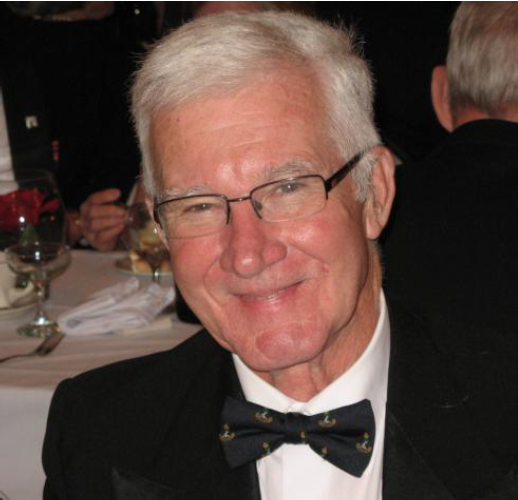 Captain (N) (Ret’d) M. Braham, CD – Mike Braham is a graduate of the Royal Military College (1965) and a former naval officer and senior official with DND. He has an abiding interest in military history.