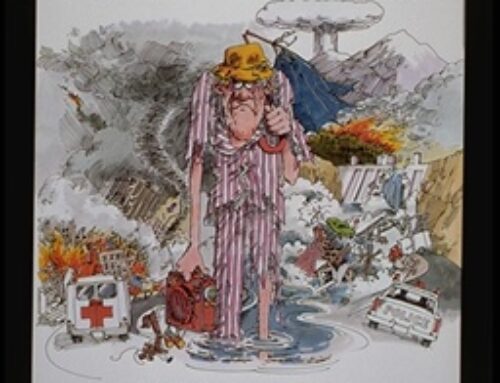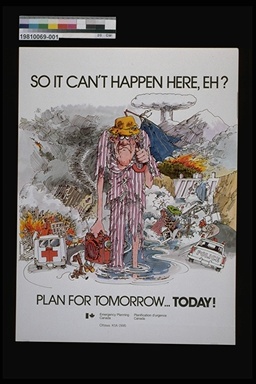

In 1959, families in Canada were instructed by their government to store quantities of food in their houses, Canadian school children practised taking cover under their desks, and television stations announced tests of emergency siren signals. Ordinary Canadians were asked to do these quite extraordinary things because there was a serious possibility that their lives and those of their families would be threatened by a massive nuclear attack on North America. The Cold War was at its most intense and potential nuclear devastation was lurking in the wings.
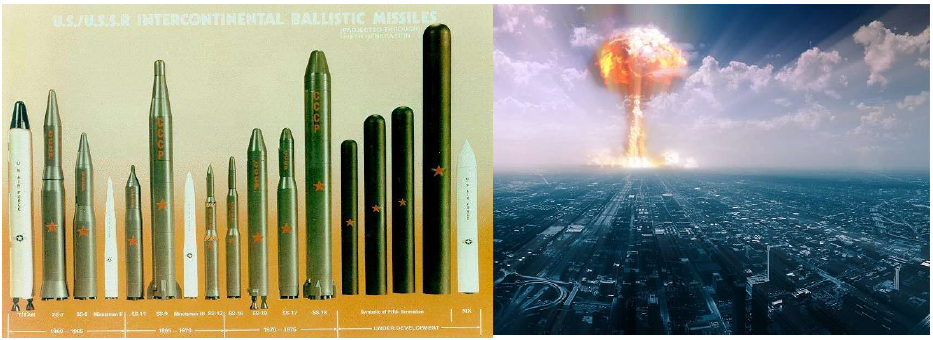
Click to enlarge – different types of US & USSR intercontinental ballistic missiles
What is a “Cold War”? Winston Churchill first coined the term in 1949. It refers to a state of hostilities between nations just short of actual combat. The development of huge stores of weapon systems including weapons of mass destruction such as nuclear bombs, the creation of large standing military forces as part of even larger alliances, intense surveillance and spying by the antagonists, sabre rattling and brinkmanship; these were all characteristics of the Cold War.
Click to enlarge
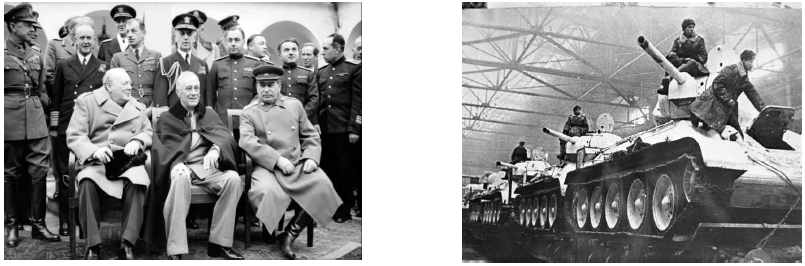
The Cold War lasted from 1945 to 1989. The Soviet Union had been an uneasy partner of the United States, Britain, Canada and during the Second World War. However toward the end of the war, with the imminent defeat of NAZI Germany, these nation’s interests in the future fate of post war Europe, and soon after the world, began to dramatically diverge. The United States’ President Truman, Britain’s Prime Minister Churchill and the Soviet’s Chairman Stalin agreed to split Europe into eastern and western zones. What made the Cold War very different from the “Hot” wars that had preceded it was the existence of nuclear weapons and the very real threat that they would be used in future conflicts. These weapons of mass destruction, developed and employed in war for the first time by the United States against the Japanese cities of Hiroshima and Nagasaki, had demonstrated their horrifically devastating effects. Subsequent development of more powerful atomic weapons including hydrogen bombs and warheads along with bombers and later sub-orbital missiles to “deliver” these weapons cast a doomsday shadow across the globe.
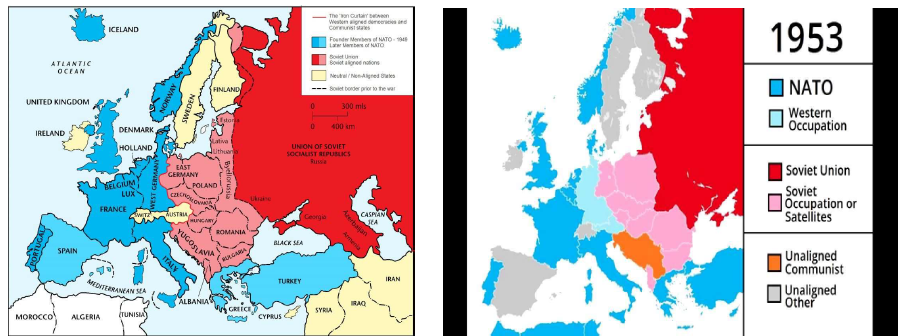
Maps of political affiliations in Europe in the early Cold War – click to enlarge
On March 5th, 1946 Churchill gave a speech at Fulton College, Missouri where he stated that “an iron curtain has descended in Europe”. This iron curtain divided the world into two armed camps, west and east. The “West”, was centred on the United States and its North Atlantic Treaty Organisation (NATO) allies. Canada’s then Foreign Affairs Minister Pearson was highly instrumental in the establishment of NATO, which had been ratified in 1949. NATO was one of the main bulwarks of the West’s defence during the Cold War. The “East” included the Soviet Union and its partners including East Germany, Poland, Czechoslovakia and Yugoslavia formed the Warsaw Pact in 1955. From that point on the lines were drawn on the map of Europe and the east-west confrontation was to threaten the survival of humanity for the next three and a half decades was underway.
As time passed the ideological struggle between communism in the east and democracy in the west grew increasingly tense. It became apparent to the political leaders on both sides and to scientists and analysts as well as to much of the planet’s population, that an all out nuclear attack by either side would have enormous consequences. Civilisation, even the very existence of all life on earth would be threatened by the use of nuclear weapons.
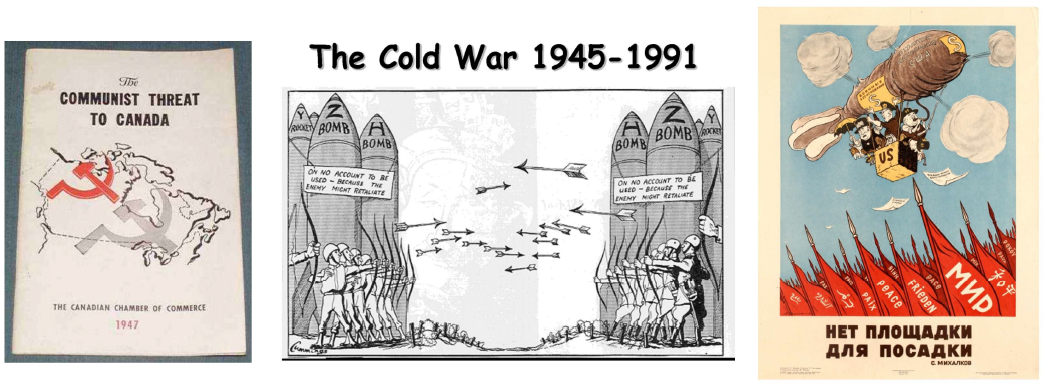
Propaganda pamphlets of both sides – click to enlarge
There was widespread fear that some international event or situation could at any time trigger the outbreak of a third world war. Many events increased the tension, at times coming very close to the brink of such a war. The Berlin Blockade; conflicts in Korea, Taiwan, Vietnam, Afghanistan; attempted revolutions in Hungary, Poland, East Germany; the construction of the Berlin Wall; “incidents” such as the Cuban Missile Crisis and the U2 spy plane downing and strife in Africa and central America are examples. Other tense situations occurred when bomber and missile warning systems inadvertently gave false indications of attack. As time went on additional nations became nuclear powers further adding to the intensity of the Cold War. The addition of France, and China to the nuclear club further increased the chances that something would go wrong. The world came close to nuclear holocaust and possible annihilation many times during the sixties, seventies and early eighties.
The West and the East each built up huge military forces, which included nuclear attack systems designed to retaliate against each other in the event of a surprise attack. These nuclear forces were well protected by either being dispersed in submarines at sea, by being mobile in disguised rail or truck launchers or by being placed underground in concrete silos. They were poised to be launched against the other side at a moment’s notice.
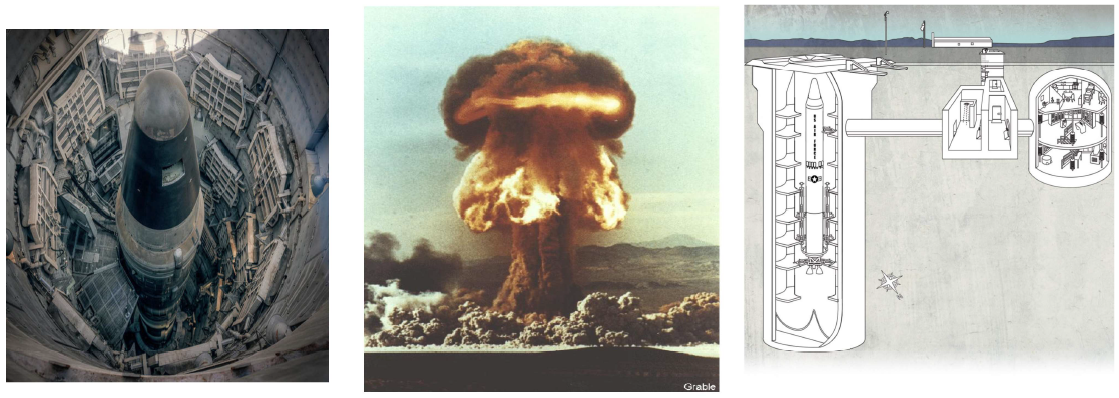
Click to enlarge
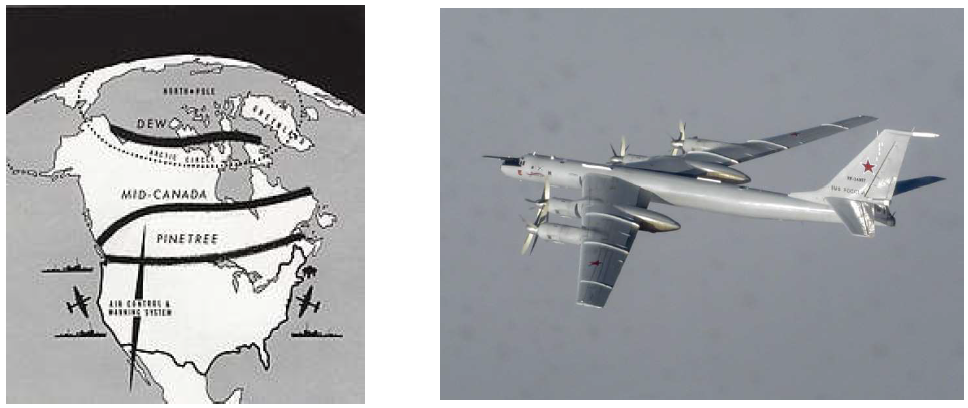
The Soviet bomber threat – click to enlarge
The existence of such retaliation systems was recognition that there was really no truly reliable, complete defence against a nuclear attack. Both sides attempted to devise counter missile systems but without much real success or confidence that they would actually function while under intense attack. Nations on both sides built secret underground, nuclear bomb resistant bunkers for their government’s leaders.
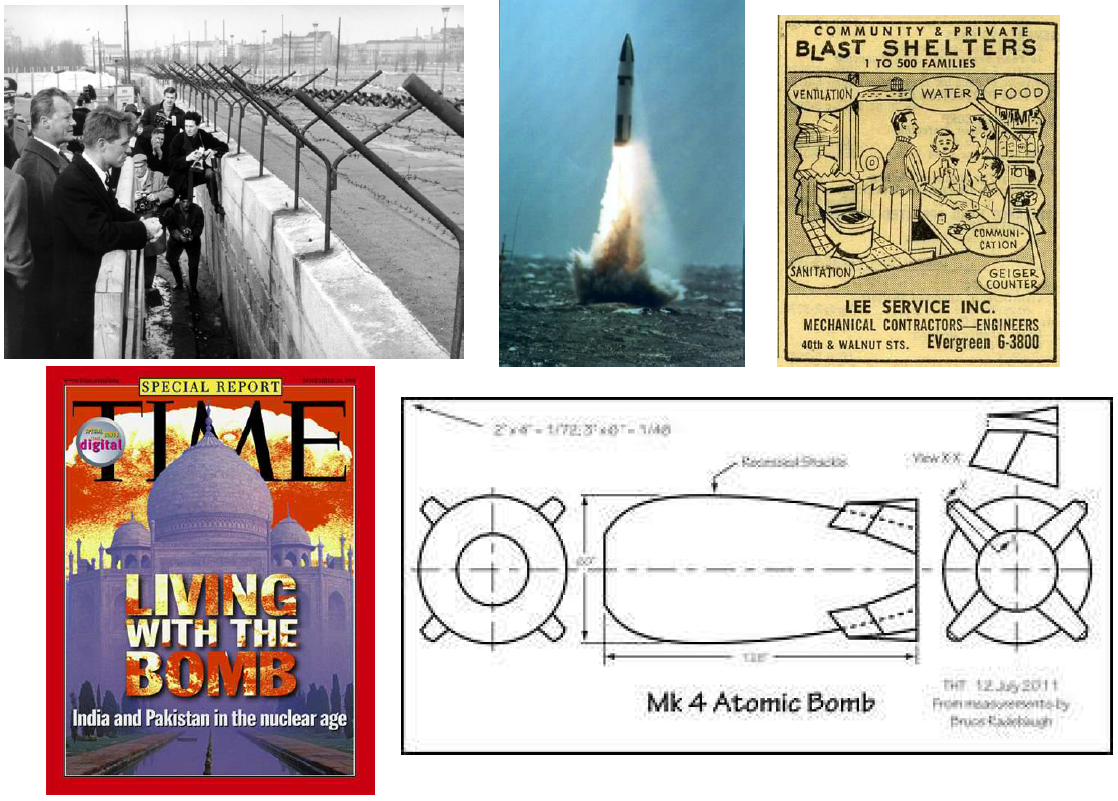
Click to enlarge