
Originally BLOG #4 – 18 Feb 2020 from davescoldwarcanada.com.
Continuity of Government versus Continuity of Constitutional Government (Consequences for the Central Emergency Government Headquarters – the ‘Diefenbunker’ in Carp, ON)
The Continuity of Government (CoG) Program was originally presented to Parliament by Prime Minister John D. Diefenbaker in 1958 and, as excerpts from the August 21, 1958 Parliamentary record (Hansard) show, his statement was unreservedly supported by the then Leader of the Opposition, Lester B. Pierson. That in itself demonstrates the importance that our parliamentary leaders at the time attached to this matter. Given the increasing and evolving nuclear thtreat posed by the Warsaw Pact particularly the Soviet Union, Canada along with most other NATO nations made similar enhanced GoG preparations. The primary purpose of the CoG program from its inception was to protect and support the essentials of Executive federal government in order to preserve a ‘thin thread’ of legitimate national government through the chaos of a nuclear attack on North America. In such a scenario all that was required to pass whatever ’emergency regulations’ that would have been needed to deal with the situation was the assent of four federal cabinet ministers and the signature of the Governor General (Governor-in-Council).
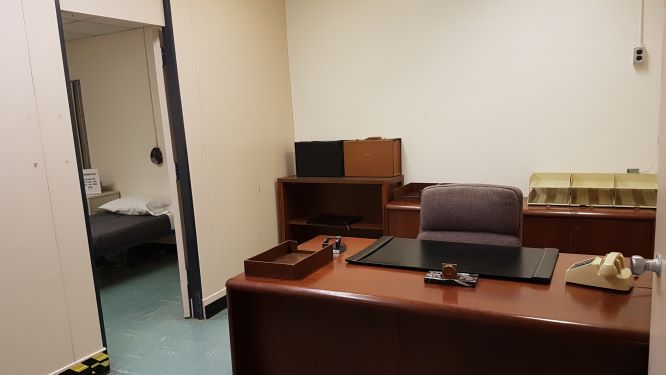
Reconstruction of Prime Minister’s Office / Bedroom Suite in the CEGHQ Carp ‘The Diefenbunker’
A primary responsibility of Emergency Preparedness Canada (the agency charged with actualizing the CoG) was to support the implementation and readiness of the program as it was set out originally by Parliament and elaborated upon in PCO’s Emergency Planning Orders.
Then in 1988 the new Emergencies Act came into being (to replace the somewhat infamously, heavyhanded War Measures Act) and, more pertinent to our CoG readiness activities, the Emergency Preparedness Act was passed. The latter had much more specific ‘instructions’ and had a very significant impact (one that probably had not been fully anticipated by the authors of the new legislation) on the Emergency Government Facilities aspects of the CoG. As a result of the fact that the ‘new’ act called for Continuity of Constitutional Government, we had to rethink the numbers aspects of our Central Emergency Government Headquarters protective accommodation arrangements. We consulted a government lawyer who was expert in constitutional law to try to determine what was the minimum we had to do to meet the requirements of the new legislation. The word ‘Constitutional’ meant that government by executive decree was out and that representatives from the legislative and judicial branches of government had to be included in our protected locations.
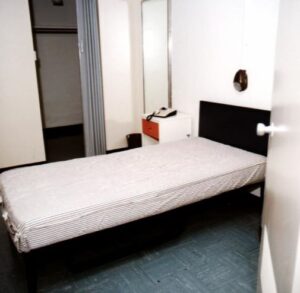
Original Bed Space in PM’s Suite “Diefenbunker” Museum
After much analysis it was concluded that we had to provide for a quorum of each of the House of Commons, the Senate, the Federal Court and the Supreme Court. A quorum of the House of Commons is 20 (including the Speaker), of the Senate is 15, of the Supreme and Federal Courts five each plus various minimum support staffs gave us a ‘doable’ number. As I recall it the total number of ‘new’ occupants that needed to be provided for was only about 55 or 60. We checked out the environmental systems in the bunker and found we were OK for the increased numbers of persons involved from that point of view. The main problem was sleeping spaces even with “hot bedding” being the norm for most occupants. That and to a lesser extent, the matter of finding suitable ‘office/working’ spaces). In room 457A (across from the EPC HF Emergency Radios Room) we experimented with converting the double bunks to triple bunks. We calculated that there were sufficient civilian double bunked rooms that if modified to triple bunks (similar to those already installed in the military sleeping quarters) we could accommodate the extra people involved. (Locker space would have been tight). We never got around to sorting out where the quorums of Parliament/Judicial bodies would have met (presumable they could have made use of the War Cabinet room and the 400 level conference room and a few other larger rooms such as the ‘lounge area’ in the senior officials sleeping area on the 200 level. Nor did the potentially thorny question of whether or not, or to what extent members of the opposition parties would have had to have been included.
The end of the Cold War and the shutting down of the then “new” Continuity of Constitutional Government Program in the early 90s followed eventually by the closing of the Emergency Government Facilities by 1994 put an end to this planning process. Despite trying hard to find other uses for the facilities that would properly make use of their capabilities, the Department of National Defence was in haste to wash their hands of the relatively minor maintenance costs of mothballing them (especially the main bunker in Carp – the Diefenbunker) and pressured EPC to abandon the program ASAP after the ‘end’ of the Cold War. (In my humble view as a senior emergency planning official we ‘threw the baby out with the bathwater’ when we closed and disposed of the EGFs and stopped related planning). In 2001 it became clear (to me anyway) that that doing so was a mistake. Who knows what current arrangements exist to serve the same purposes as did the CoG program (if any) and how effective they would be in a nuclear-type terrorist crisis compared to the extensive and expensive-to-build original EGFs along with their associated activation plans. One can only hope!