
Introduction:
The War Measures Act was a statute that allowed the Canadian government to assume sweeping emergency powers in the event of “war, invasion or insurrection, real or apprehended”. Enacted in August 1914, the act remained in force until being superseded by the Emergencies Act in 1988.
The Act was invoked three times in Canadian history: during the First World War, the Second World War, and the 1970 October crisis. It was also used in a limited way during the Korean War.
World War I:
The War Measures Act was enacted on 4 August 1914, and remained in effect until 10 January 1920. With the advent of the Russian Revolution in 1917, additional regulations and orders were added to make the membership in a number of organizations, including socialist and communist organizations forbidden. Immigration from nations that were connected directly or indirectly with the Austro-Hungarian Empire and Germany was stopped and natives of those countries (Austria, Hungary, Germany and Ukraine) were classed as enemy aliens and required to carry ID with them at all times. They were not permitted to possess firearms or leave the country without permission nor publish or read anything in a language other than English or French. Thousands of these enemy aliens were interned in camps or deported from Canada.
World War II:
In reaction to a widespread fear of foreign nationals spying and working against Canada the federal government used the Act and the accompanying Defence of Canada Regulations to implement Japanese Canadian internment, which resolved that any citizen of Japanese descent including children were to be sent to internment camps in the interior of British Columbia for the duration of the war, along with any property or money seized by the government. Other enemy aliens were also interned as well as members of groups considered subversive.
The 1970 October Crisis:
In 1970, Quebec nationalists and Front de libération du Québec (FLQ) members kidnapped British diplomat James Cross and Quebec provincial cabinet minister Pierre Laporte, who was later murdered. At the request of the Mayor of Montreal, Jean Drapeau, and the Quebec provincial government, and in response to general threats and demands made by the FLQ, the federal Liberal government of Pierre Trudeau invoked the War Measures Act on 16 October 1970. This gave police additional powers of arrest and detention. While the War Measures Act was in force, 465 people were arrested and held without charge.
Under provisions of the National Defence Act, the Canadian Forces had been called to assist the police. They appeared on the streets of Ottawa on 12 October (four days before invocation of the WMA), and upon request of the Quebec government with unanimous consent of all party leaders in the Quebec National Assembly, on the streets of Montreal on 15 October (the day prior to WMA invocation).
The use of the War Measures Act to address the problem presented by the FLQ was supported by Canadians in all regions of Canada. However, there were also many vocal critics of the Government action, including New Democratic Party leader Tommy Douglas, who said, “The government, I submit, is using a sledgehammer to crack a peanut.”
Replacement of the War Measures Act:
The Act’s 1970 regulations were replaced by the Public Order (Temporary Measures) Act of November 1970, which expired on 30 April 1971.
In May 1981, an Order in Council adopted by the Trudeau government adopted an Emergency Planning Order which assigned responsibilities for planning to meet the exigencies of different types of emergencies to various Ministers, and departments and agencies of government.
In 1988, the Progressive Conservative government of Prime Minister Brian Mulroney introduced Bill C-76, the Emergency Preparedness Act. At the same time the Emergencies Act was introduced, and passed, as a replacement for the War Measures Act, which was repealed under Bill C-77.
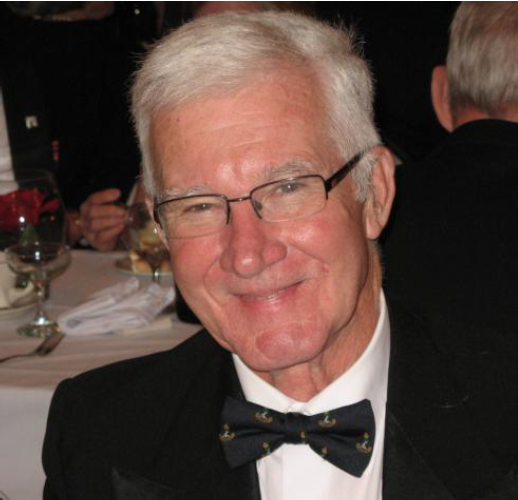 Captain (N) (Ret’d) M. Braham, CD – Mike Braham is a graduate of the Royal Military College (1965) and a former naval officer and senior official with DND. He has an abiding interest in military history.