

Canadian Forces Leitrim crest – click to enlarge
Note from webmaster: The following information has been gleaned from open sources on the internet.
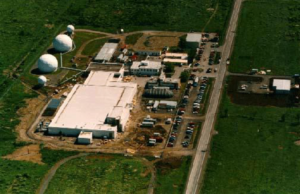
CFS Leitrim, located just south of Ottawa, is Canada’s oldest operational signal intelligence collection station. Established by the Royal Canadian Corps of Signals in 1941 as 1 Special Wireless Station and renamed Ottawa Wireless Station in 1949, CFS Leitrim acquired its current name when the Supplementary Radio System (SRS) was created in 1966. In 1946, the station’s complement was 75 personnel. By 2005, the station had grown to 450 military personnel and 28 civilian employees.
PACERM PETERE, the station’s motto means Research For Peace. Crest Significance: The flashes indicate the role of the unit, while the green belt refers to the location of the unit in the Ottawa green belt. The crest of the Arms of Gloucester bears a maple tree. The fact that Leitrim is in Gloucester Township is recognized by the maple leaf.
Leitrim’s mission is to:
- Operate and maintain signals intelligence collection and geolocation facilities in support of the Canadian cryptologic program, interception, decrypting and processing of communications for the Communications Security Establishment
- Operate and maintain radio frequency direction finding facilities in support of search and rescue and other programs.
- Maintain an operationally ready Cryptologic Direct Support Element in support of military operations.
- Provide technical and logistic support to other units of the Canadian Forces Information Operations Group.
Leitrim reportedly forms part of the world wide ECHELON system. CFS Leitrim is composed of the following units:
- 76 Communication Group (76 Comm Gp)
- Canadian Forces Crypto Maintenance Unit (CFCMU)
- Canadian Forces Crypto Support Unit (CFCSU)
- Canadian Forces Data Centre (CFDC)
- Canadian Forces Electronic Warfare Center (CFEWC)
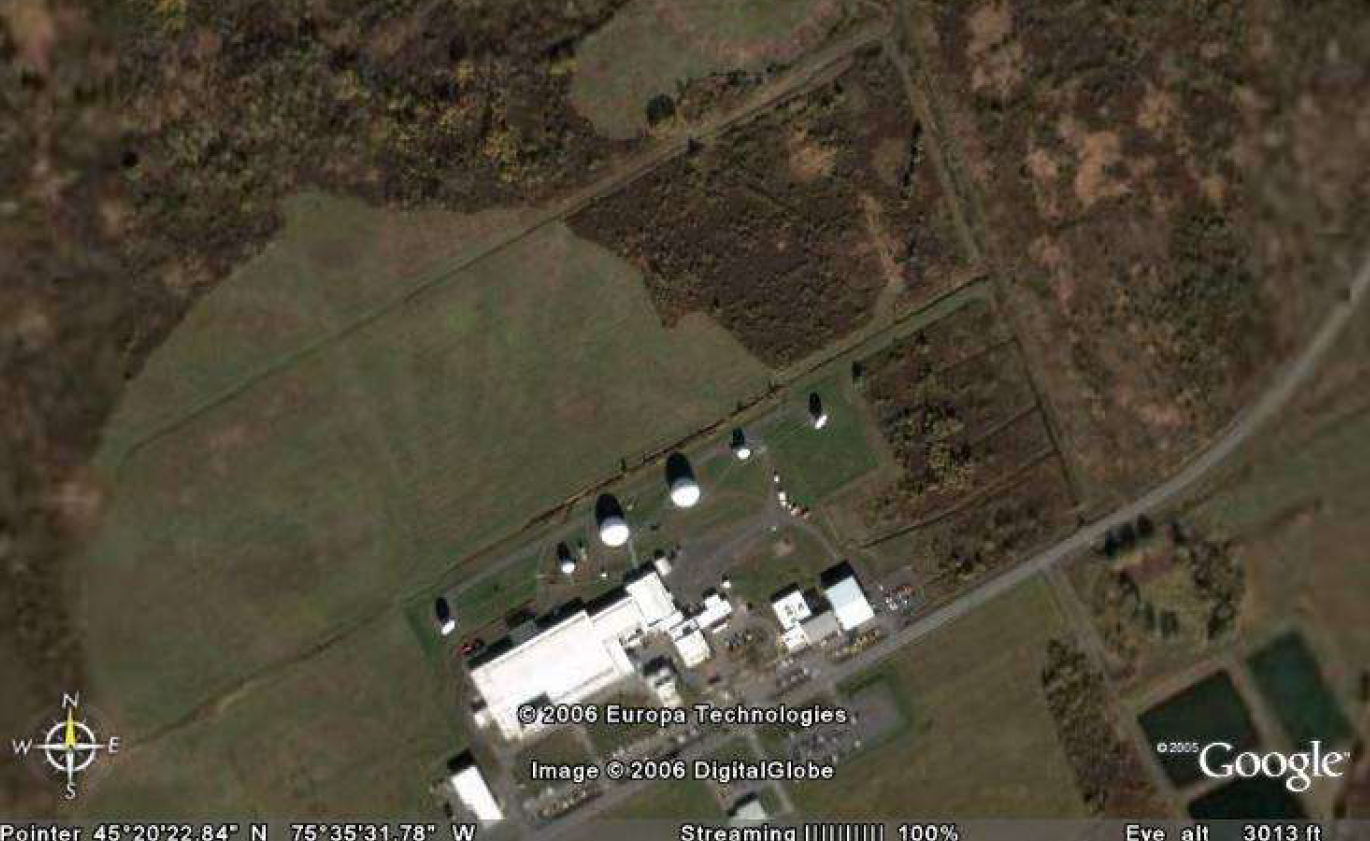
Satellite view of CFS Leitrim – click to enlarge
This overhead view (before construction of the ‘bypass’), from an altitude of 3,000 feet, shows the main buildings, the radomes and in the upper center, the Pusher antenna. The Pusher system is designed for the interception, monitoring, direction-finding and analysis of radio signals in the HF band from 1.5 to 30 MHz communicated in plain language.
Click to enlarge
Click to enlarge
Click to enlarge
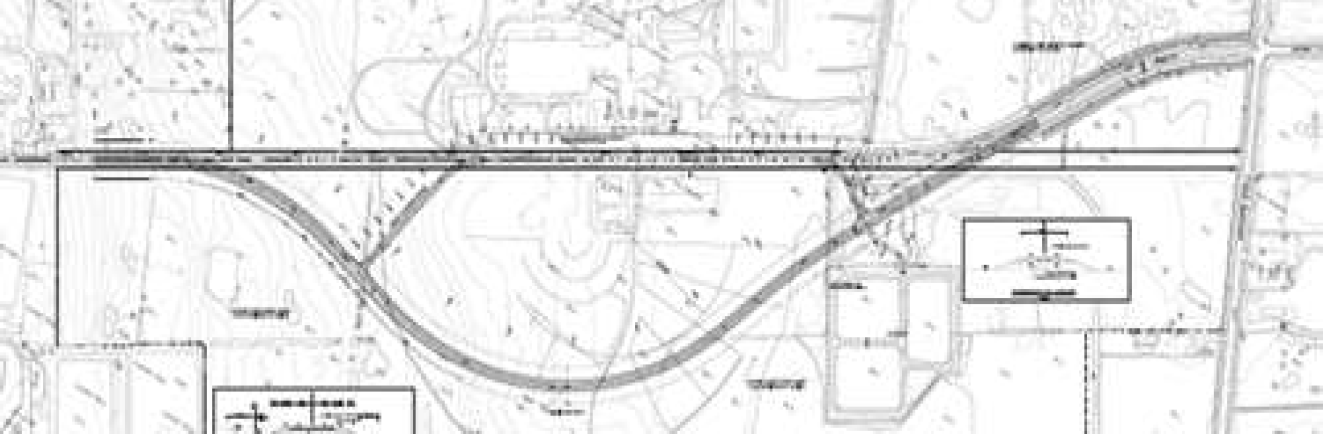
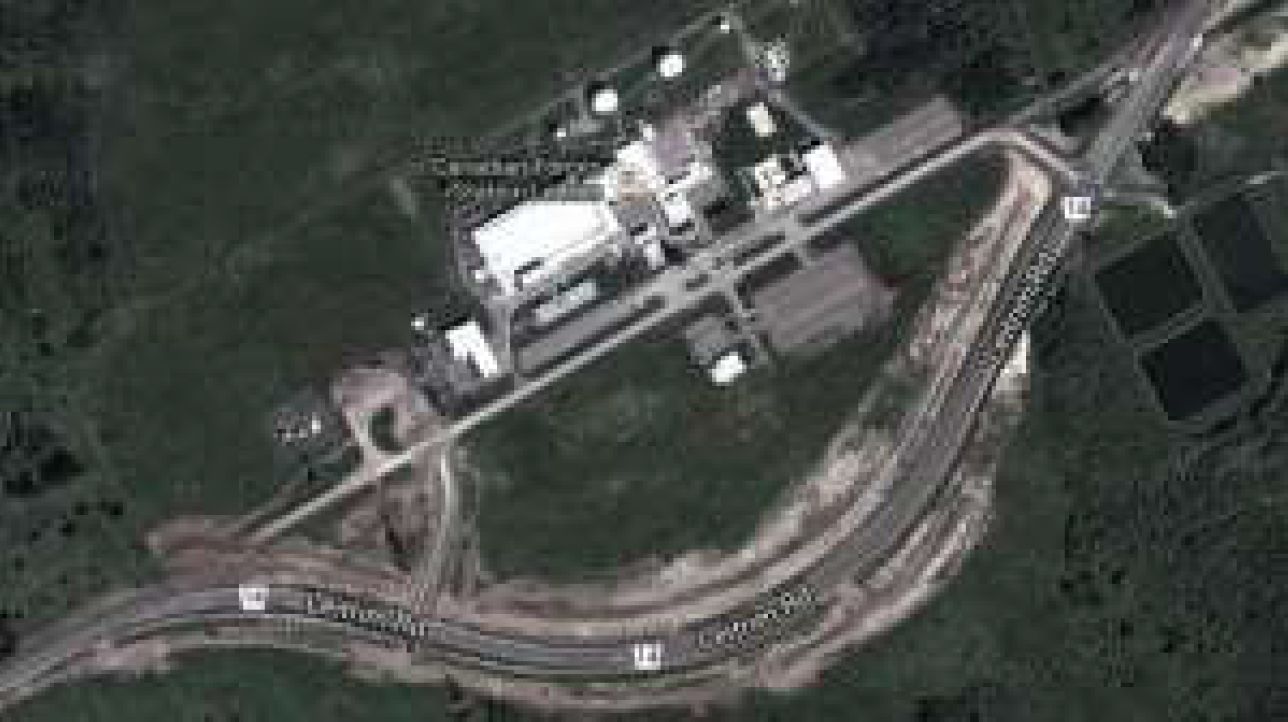
With the development of potential threats to the facility it was determined that the building setbacks at CFS Leitrim did not satisfy the security zone requirements separating the Station from a public roadway as the property was bisected by Leitrim Road between Bank Street and Hawthorne Road. The footprint of the DND facility did not meet the 100-metre setback requirement between Leitrim Road and the existing infrastructure as determined by a risk assessment completed for the facility.
The goal of the road diversion project was to ensure an adequate security buffer zone (160 metres) which included an additional (60-metre) offset to accommodate berms and landscape to reduce visual exposure to the site. This meant that a no access zone needed to be created where the public are not permitted within this setback.
The following is a quote from one operator: George Fraser comments on the most import accomplishment of SRS. “I would say the most significant contribution made by our SUPRAD/SRS intelligence gathering system was during the Cold War and specifically the Cuban Missile Crisis. When President Kennedy was able to confront Chairman Khrushchev and point out to him that ‘we’ are aware and have pinpointed the diesel driven subs that were on their way to the Cuban area and that ‘we’ had targeted all of the Soviet Nuclear subs sitting on the bottom off the North American Coast from Newfoundland to Florida all of which would be destroyed if he (Khrushchev) didn’t pull back his ships from breaking the U.S. Blockade.
It was reported at the time that Khrushchev was visibly shaken with this news and immediately altered his stance with respect to delivering missiles to Cuba. In addition, it is my opinion that our contributions were many and continuous over the period and contributed in no small measure to the fact that we were able to contain the Soviets through our intelligence gathering. For example, we knew their aircraft, armies and naval forces movements throughout the USSR as well as globally. This information provided the Americans with the ability to target their warheads from silos across the U.S. on specific targets. Hell we could tell you how many truck loads of ore were being moved in Siberia on a daily basis. These communications were in plain language as were most of the Soviet communications in the very extreme north even some military detachments. That is why we were so successful in capturing the movements of their fighters when they scrambled in response to U.S. over flights.
Our intelligence operators – Navy, Army, Air Force and civilian can take great pride in the job they did in stopping the Russian Bear in his tracks. Other areas in which our Intelligence excelled are too numerous to mention. One had only need visit GCHQ or NSA to realize how Canadians were held in very high esteem by these organizations.”