Background
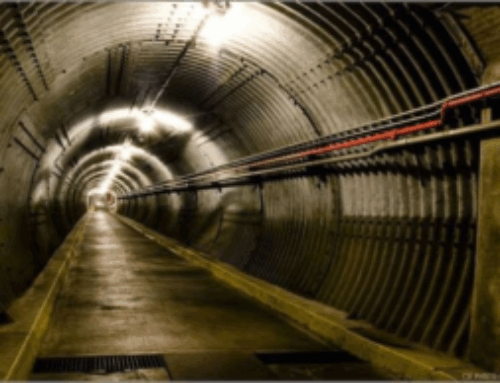
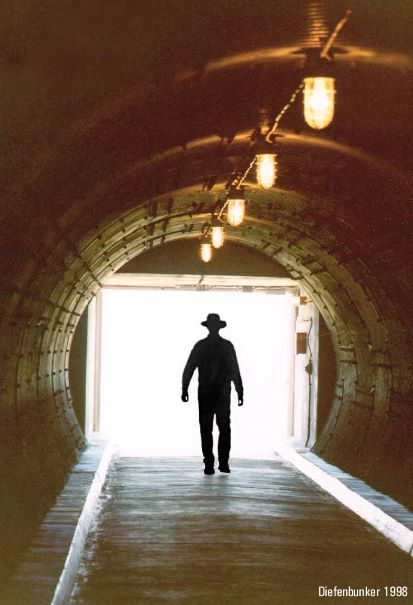
1. Constructed in the years 1959-61, the Central Emergency Government Headquarters (CEGHQ) at Canadian Forces Station Carp, popularly known as the Diefenbunker, was the flagship of a hierarchy of a cross-country network of government shelters which were an integral part of Canada’s preparations for a possible nuclear attack on North America. Militarily Canada hoped to gain some protection through participation in such collective defence alliances as the North American Air Defence (NORAD) Agreement and the North Atlantic Treaty Organization (NATO).
2. On the civil side a rudimentary Civil Defence program was in existence although it never really fully reached a state of complete readiness. Arrangements were at varying degrees of preparedness in the following areas:
a. The Continuity of Government Program (the system of shelters for selected government officials),
b. Radiation Defence (monitoring and reporting on nuclear detonations and fallout radiation levels).
c. The Emergency Broadcasting System (mainly CBC radio),
d. The Emergency Public Information System ( government run, to be staffed by public relations specialists and well-known media personalities),
e. Emergency Hospitals and Medical Treatment Arrangements ( 200 stored deployable 200 bed hospitals along with thousands of pre-packaged kits for other medical treatment including blood transfusions, etc.),
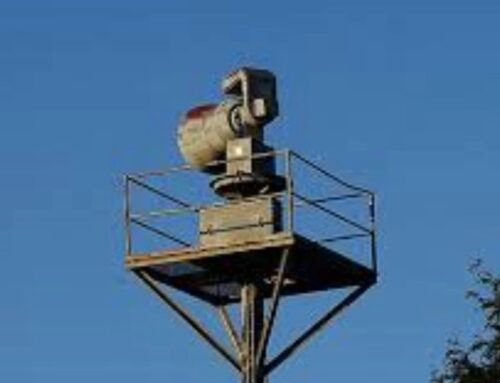
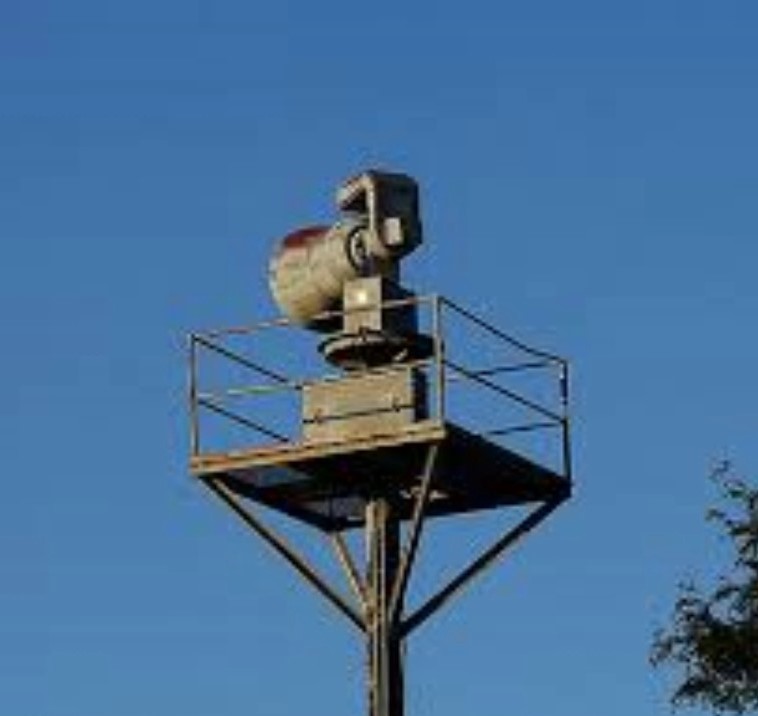
f. The Attack Warning System ( a system for triggering the nation-wide system of 1700 sirens and pre-recorded emergency radio broadcasts),
g. Reentry (into damaged areas) and rescue (from collapsed structures) arrangements (in the early 60’s the responsibility of the Army but later given to the provinces).
Continuity of Government (C of G) Facilities
3. Primary control of all of the above programs would have emanated from the CEGHQ at Carp where about 550 people would have been involved in the information acquisition and analysis, decision making and telecommunications operations necessary to attempt to provide for a “thin thread” of continuity of government from before to after a nuclear attack. By this means it was hoped to avoid having the whole country falling into complete anarchy. Of course this would not have been done in complete isolation. Sufficient redundant telecommunications existed to provide contact with areas of the country not so badly hit by fallout and with other headquarters in the network.
4. In the provinces, at a safe distance from their capital cities, were Regional Emergency Government Headquarters (REGHQs) sheltering upwards of 350 people including representatives of provincial governments. A few REGHQs had Regional Relocation Units (RRUs) for overflow and backup purposes. In provinces with large populations there were additional Zone Emergency Government Headquarters (ZEGHQs) that reported to REGHQs and to which Municipal Emergency Government Headquarters (MEGHQs) would have reported.
The Governor-in-Council and Backup
5. As a backup to the CEGHQ there were six other less protected shelters located at further distances from Ottawa in equipped spaces in the basements of various federal buildings from Cornwall to Pembrooke. These Central Relocation Units (CRUs), similar in some respects to the RRUs mentioned above, held 90-150 people and could have taken over in case the Carp bunker was destroyed or otherwise out of operation. Sufficient officials, legally empowered to act on behalf of the government were located in the CRUs in order to act as the Governor-in-Council if necessary.
6. To have legal government in Canada in such an extreme emergency (as a nuclear attack on North America would have been), all that was needed was the Governor-in-Council (G in C) consisting of a group of four ministers (one of which would likely have been the Prime Minister) and the Governor General. If the GG was dead or unable to function, The Chief Justice of the Supreme Court (or failing that), any justice of that court would have sufficed. These ‘teams’ of ministers and justices would have been located in the CRUs, ready to assume their role as backup if necessary.
CEGHQ Organization
7. The Governor-in-Council along with other ministers of the War Cabinet would have been the core officials in the bunker. A small Cabinet Secretariat (composed of officials from the Privy Council Office) would have provided coordination of government operations. They and other decision makers would have been further supported by about 300 officials representing some 20 federal departments and agencies responsible for such functions as national defence, food production and distribution, transportation, communication, public works, housing, security, and many others. A small Military Information Centre would have kept everybody informed as to the military situation in North America, Europe, and the World. Likewise a small Civil Information Centre would have kept officials up-to-date on what was happening in Canada with respect to damage and casualties to the population and the impact of the attack on the nation’s infrastructure (bridges, rail centres, ports, grain and other food supplies, telecommunication systems, energy supplies, and the like). Military personnel would have provided both the telecommunications into and out of the CEGHQ as well as the site administration (feeding, facility maintenance and operation, security, etc.) services.
Some General Comments
8. Backup and alternatives were to be arranged for every person who would have been assigned a responsibility at the CEGHQ to ensure that all positions would have been filled upon the close down and full occupation of the facility. Movement of people, records, equipment and supplies would not have been a last minute rush because advance parties would have moved onto location when strategic warning of a possible threat of attack was received, possibly weeks earlier. Higher level selected and elected officials would have moved to the bunker using the fastest means possible on receipt of tactical warning. At that time an attack would have imminent and the take-cover warning sirens would likely have been sounding across the nation. As an interesting side note no occupant of any of the various emergency government headquarters would have been permitted to bring his or her family to the shelters – they had to make their own family protection arrangements.
Conclusion
9. The Diefenbunker (CEGHQ) at Carp was at the centre of a large network of shelter facilities, plans, arrangements, and other organizations that would have attempted to provide for a level of continuity-of-government during and immediately after a nuclear attack on North America. To what degree it would have successfully done so was, fortunately, never tested and will never be known. From time-to-time the cold war heated up but it never really hit the boiling point and turned into an all out exchange of nuclear weapons.